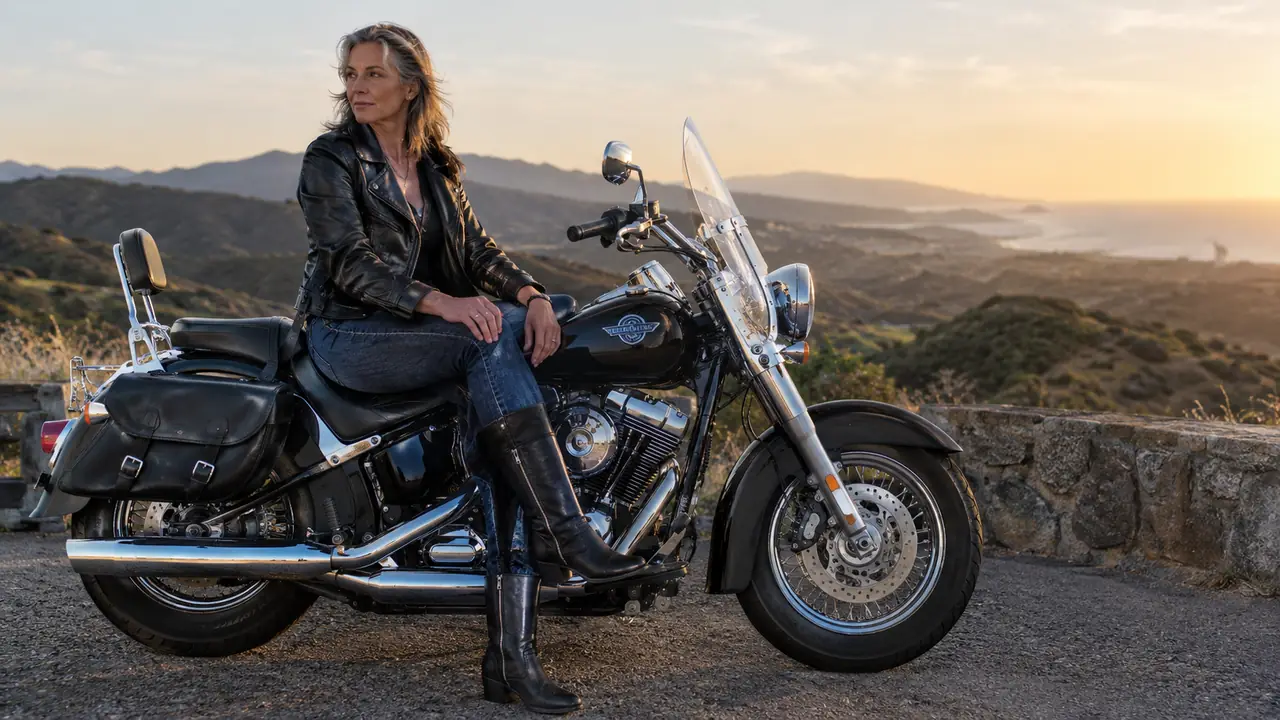
I have owned a pair of Harley-Davidson Eda boots for about a year now, and I want to tell you the things I wish someone had told me before I ordered them. Most reviews read like the product page wrote them. This one is not going to do that. I ride a Heritage Softail, I am 59, I have been riding for about 22 years, and I put most of my miles on weekend group rides and a couple of longer trips a year. These boots have done all of that with me, and they have some real strengths and some real annoyances.
The short version: the Harley-Davidson Eda boots are a solid mid-calf riding boot for street and touring riders who want something that looks right on a cruiser, covers the ankle and lower leg, and does not feel like a work boot. They are not the most protective boot Harley-Davidson makes, the toe box is roomy, the break-in takes about a week, and they run warm in summer. Here is the honest version.
The Quick Verdict
A comfortable, good-looking mid-calf boot for everyday street and touring riding, with solid ankle coverage and a reasonable price. Not the most protective option for aggressive riding, and the break-in and summer heat are real tradeoffs.
Amazon Check Today's Price →The boots I reach for on every street ride
After about a year of regular use, the Harley-Davidson Eda boots are still my go-to for weekend rides and around-town miles. If you want a mid-calf boot that looks right on a cruiser and covers your ankle without feeling like a work boot, check today's price on Amazon.
Amazon Check Today's Price on Amazon →How I've Used Them
I bought these boots in the spring, about a month before the riding season really got going here in Bakersfield. Since then they have been on almost every ride I have taken: the Saturday morning breakfast runs with my local riding club, the monthly group rides through the Central Valley, and one longer trip up the coast where I put about 1,400 miles on them over five days. They have also been my go-to for shorter errand rides, trips to the grocery store, and the occasional evening ride with my husband Ray, who rides his own bike.
That mix matters, because a boot that only works for a two-hour Sunday ride is a different product from one that has to handle a 300-mile day. I have worn these boots in the heat of a Central Valley summer, in a surprise rain shower on the coast, and on plenty of days where the temperature swung from cool morning to hot afternoon. I have also worn them off the bike, walking into diners and gas stations, which is where a lot of riding boots fall apart in comfort. I even did a 45-minute commute one Tuesday, and they felt fine from the first block.
One thing I want to be clear about: I am not a hard-core rider. I do not do track days, I do not ride in heavy rain by choice, and I am not scraping pegs on canyon roads. I am a street and touring rider who wants real leather coverage, all-day comfort, and boots that do not look out of place at a rally. That is the context for everything below.
What Nobody Tells You About the Fit
The first thing nobody tells you about the Harley-Davidson Eda boots is that the toe box is roomier than you expect. I wear a women's 8.5 in most shoes, and the 8.5 in these fits true to size with a little extra room in the toe. If you are between sizes, I would size down rather than up. The extra room is not a problem once you have a decent pair of riding socks on, but if you plan to wear thin socks, the boots will feel loose. I learned this the hard way: on my first ride with a pair of thin summer socks, my foot slid forward a bit and I could feel the toe box pressing on my toes during a hard stop.
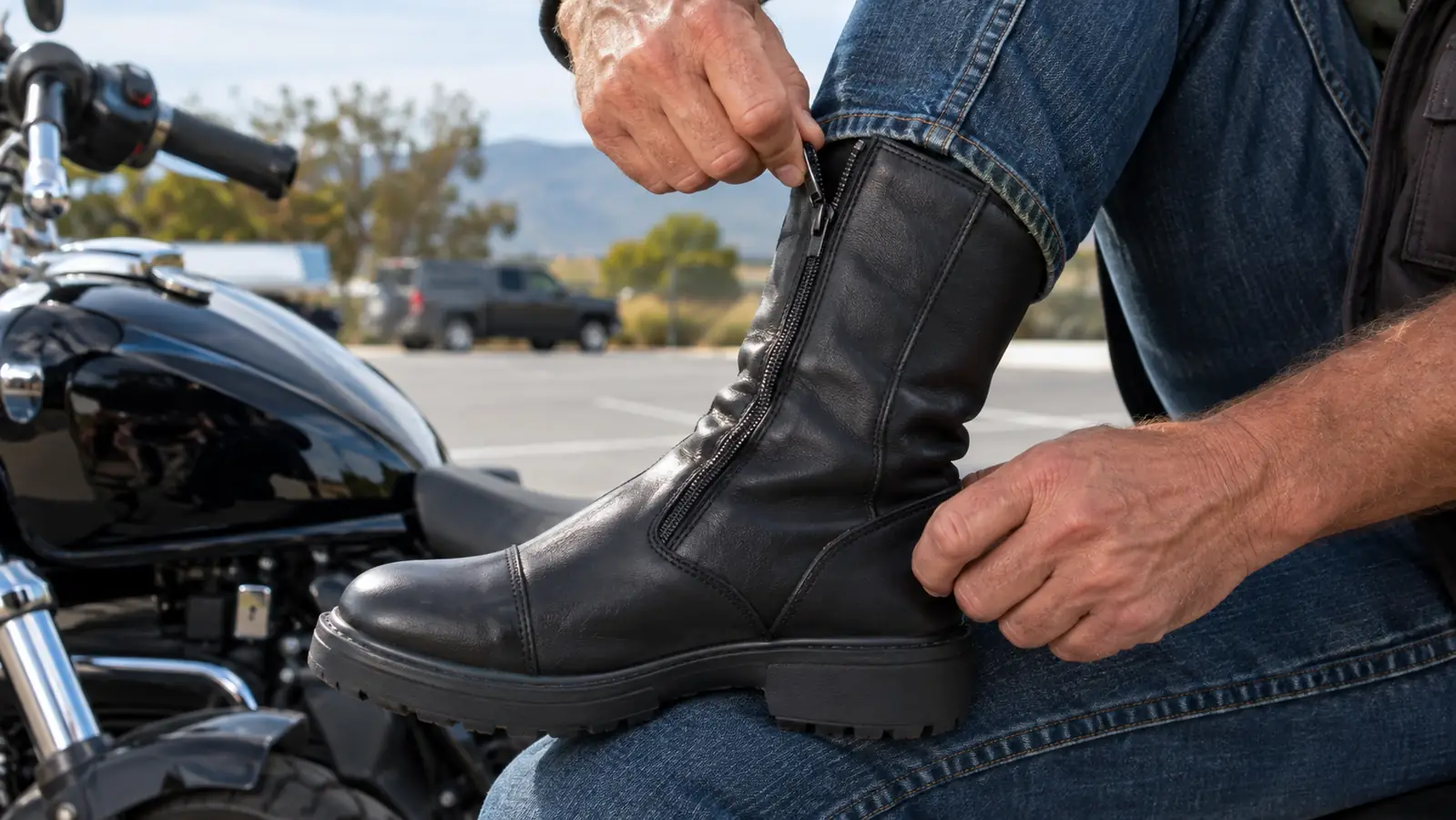
The second thing is the break-in. These boots are a little stiff when they arrive. The leather is substantial, and the shaft around the calf does not give much at first. The first week, I could feel the leather pressing against the front of my ankle when I walked, and the zipper was stiff enough that I had to use both hands to get it up. I almost sent them back. I am glad I did not, because after about a week of regular wear, the leather softened up considerably and the zipper loosened. But if you buy these expecting them to feel like sneakers on day one, you will be disappointed. I tried to speed the break-in by wearing them around the house for a few evenings, but the real change only came after they had spent a full day on the bike and got some heat in them.
The third thing is the calf fit. The shaft is mid-calf height, and it is not especially wide. I have average-size calves and they fit fine with jeans tucked in or rolled. If you have larger calves, or if you like to tuck heavy riding jeans into your boots, these may feel snug. There is no adjustment, no lacing, no gusset. What you see is what you get. A friend from our riding club tried them on once and she could not get the zipper all the way up over her calf. So if you are in that situation, you already know what that means.
What I Liked
- Good-looking mid-calf boot that suits a cruiser and a rally crowd
- Solid ankle and lower-leg coverage for street riding
- After break-in, comfortable for all-day wear and easy to walk in
- Full-length zipper with a protective flap makes them quick on and off
- Reasonable price for the Harley-Davidson badge
Where It Falls Short
- Break-in takes about a week of shorter rides
- Roomy toe box, so thin socks can let your foot slide forward
- Not waterproof; leather soaks through eventually
- Run warm in summer, with no ventilation panels
- No hard armor or reinforced toe; not for aggressive or track riding
Comfort on the Bike and Off
On the bike, these boots are genuinely comfortable. The low heel, about an inch, sits nicely on the foot pegs of my Heritage Softail, and the sole gives you a solid feel for the controls without being so stiff that you cannot feel the brake pedal. I have done 300-mile days in them without the foot fatigue I have felt in other boots. The ankle coverage is good, and the leather is thick and sturdy, though it is leather, not armor. On a 250-mile day from Bakersfield over to Paso Robles and back, I never once thought about my feet, which is about the highest praise a boot can get.
Off the bike is where they surprise you. A lot of riding boots are miserable to walk in. These are not. I have walked around gas stations, diners, and a couple of bike shows in them without wanting to take them off. The sole has a reasonable amount of flex, and the low heel means you are not walking on a wedge. That matters more than you think when you are on a multi-day trip and every stop involves walking. I remember one day at a rally in Monterey, I put in five miles of walking around the vendor area and my feet still felt fine when I got back on the bike.
The one comfort issue is heat. These boots are not well ventilated. The leather is thick, and there is no mesh panel or breathable lining to speak of. In the Central Valley summer, when it is 100 degrees at noon, my feet get hot. Not unbearable, but noticeably warmer than they would be in a lighter boot. I have learned to plan for it: if I know I am going to be in stop-and-go traffic in the middle of the day, I wear thinner socks and skip the insoles. If you ride mostly in hot weather, this is a real consideration. If you ride in cooler weather, you will appreciate the warmth.
The break-in took about a week, and for the first couple of days I wondered if I had the right size. After that, they became the boots I reach for on every ride.
Protection: What These Boots Actually Do
Let me be honest about protection, because this is where the marketing gets fuzzy. The Harley-Davidson Eda boots are a mid-calf leather boot with a zipper and a low heel. They cover your ankle and the lower part of your calf. That is better than riding in sneakers, but it is not the same as a certified protective boot. But they are not a reinforced riding boot. There is no hard armor in the ankle, no reinforced toe box, no oil-resistant sole that I can verify, and no claim of a specific safety rating that I can find. They are a street boot that offers better coverage than a sneaker or a work boot.
What that means in practice: for street riding, commuting, and touring, these boots give you leather coverage over your ankle and lower leg, which is better than sneakers or canvas shoes, but they are not designed or rated to protect you in a crash. I have seen what a bootless foot looks like after a low-speed drop, and I would not go back to riding without proper boots. But if you are doing aggressive canyon riding or track days, you want a boot with actual armor and a stiffer sole. These are not that boot. If crash protection is your priority, look for a boot that is CE-rated for motorcycle use, with ankle armor and a reinforced toe and heel.
The zipper is worth mentioning here. It is a full-length zipper, which makes the boots easy to get on and off, and it is covered by a leather flap. That flap is important, because it keeps the zipper from catching on your jeans and it adds a little extra layer between the zipper and your leg. In about a year, the zipper has not failed, and the flap has held up fine. I have also noticed that the zipper pulls smoothly even with thick jeans tucked in, which is more than I can say for some other boots I have owned.
How They've Held Up Over Time
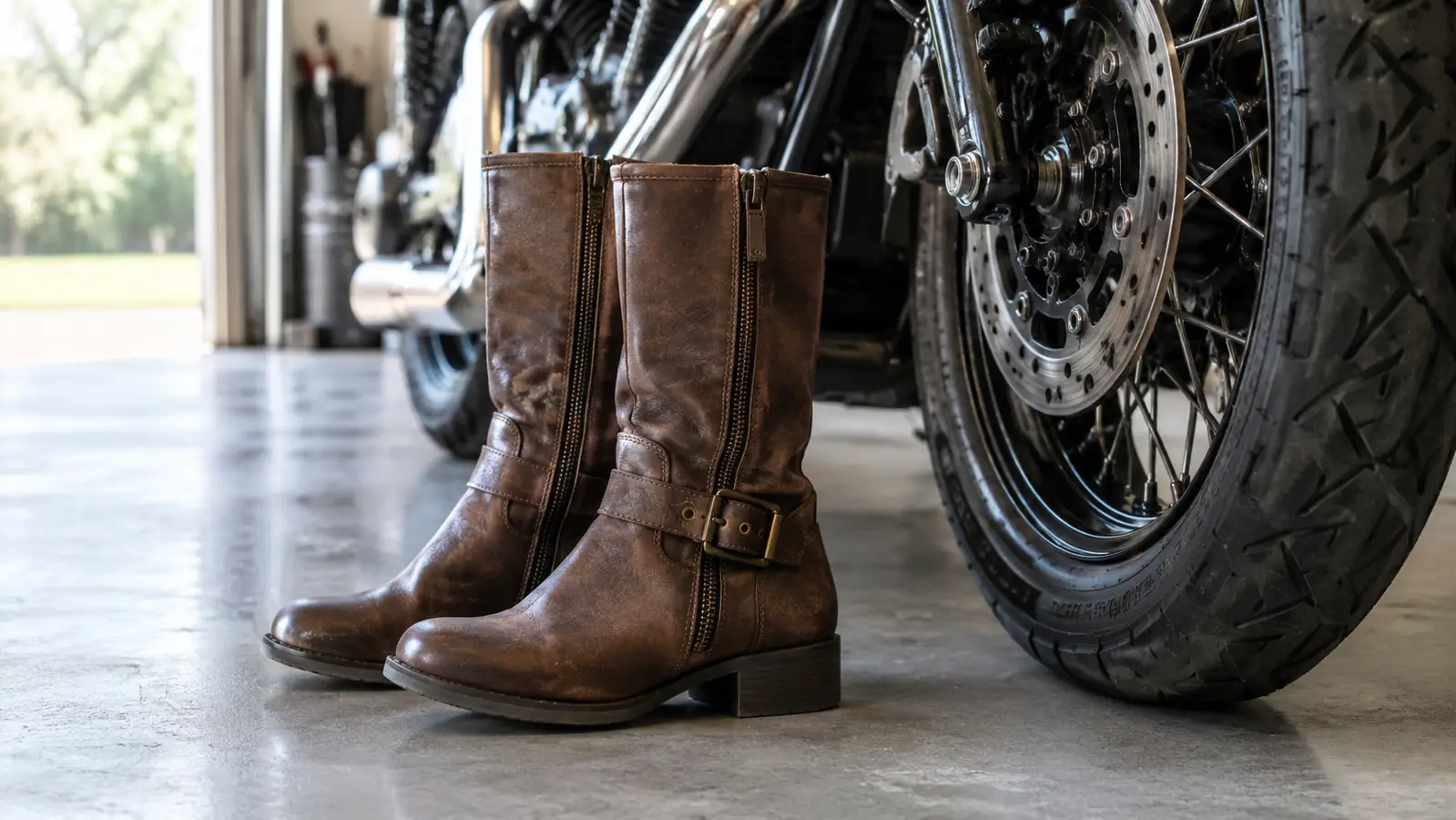
I have had these boots for about a year, and I have put a lot of miles on them. The leather has softened and developed a nice patina. The soles show normal wear, but nothing that concerns me. The zippers still work smoothly. The stitching is holding up, including the stitching around the zipper flap, which is a spot where cheaper boots tend to fail. I have not had to do any repairs, and I have not treated the leather with anything beyond an occasional wipe-down with a damp cloth and a light coat of leather conditioner that I already had in the garage.
The one thing I have noticed is that the leather scuffs fairly easily. The first time I brushed against the exhaust pipe, I left a mark that took a while to buff out. That is not a defect, it is just the nature of leather, but if you are the kind of person who wants your boots to look perfect, you will be doing some maintenance. I have learned to accept the scuffs; they add character. After a particular ride on a dusty backroad, the boots were covered in fine dust, and a quick wipe brought them back to looking good. I also never have to worry about laces: these boots have a zipper, so that whole category of failure is gone.
I also want to mention the rain. These boots are not waterproof. They are leather, and leather will soak through eventually. I got caught in a shower on the coast, and my feet stayed dry for about 20 minutes, then started to feel damp. If you ride in the rain regularly, you will want a waterproof boot or a pair of rain covers. For the occasional shower, they are fine. I have since treated them with a silicone spray, which helps a little, but it is not a substitute for a real waterproof membrane.
Who This Is For
The Harley-Davidson Eda boots are for the rider who wants a good-looking mid-calf boot for street and touring riding, with solid ankle coverage, all-day comfort, and a reasonable price. They are for the rider who does most of their miles on weekend rides, commutes, and the occasional longer trip, and who wants a boot that works on the bike and does not punish you when you walk into a diner. They are for the rider who likes the look of a classic cruiser boot and does not need track-level armor. If that sounds like you, these are worth a serious look.
Who Should Skip It
Skip these boots if you ride aggressively and want real ankle armor and a stiff, protective sole. Skip them if you ride in the rain regularly and need a waterproof boot. Skip them if you have larger calves and need an adjustable shaft. And skip them if you want a boot that feels broken in from the first wear, because these take about a week to soften up. And if you are looking for a boot that can take the abuse of a track day, you will want something with a CE rating and a stiffer shank. None of those are deal-breakers for me, but they are real reasons someone else might be better served by a different boot.
Alternatives I Considered
I looked at a few other boots before I settled on these. I considered a taller lace-up boot from another brand, but I wanted something I could get on and off quickly, and the zipper won. I also looked at a more protective touring boot with a reinforced sole, but it felt like overkill for the kind of riding I do, and it was heavier. The Harley-Davidson Eda boots hit the balance I wanted: solid leather coverage for relaxed street and touring, comfortable for all-day wear, and easy to live with. I also wore a pair of harness boots for years before these, and while they look great, the extra height made them noticeably harder to put on and take off.
If you are comparing the Eda boots to the taller Harley-Davidson harness boots, the main difference is height and weight. The Eda is a mid-calf boot, lighter and easier to walk in. The harness boot gives you more coverage and a more classic look, but it is heavier and takes longer to get on and off. For my kind of riding, the Eda is the better daily choice. If you want maximum coverage, the harness boot is worth a look, but be prepared for a longer break-in and a bulkier feel.
Still the boots I'd buy again
After about a year, I would buy the Harley-Davidson Eda boots again. They are not perfect, but they are the right balance of comfort, coverage, and style for the way I ride. If that sounds like you, check today's price on Amazon.
Amazon Check Today's Price on Amazon →