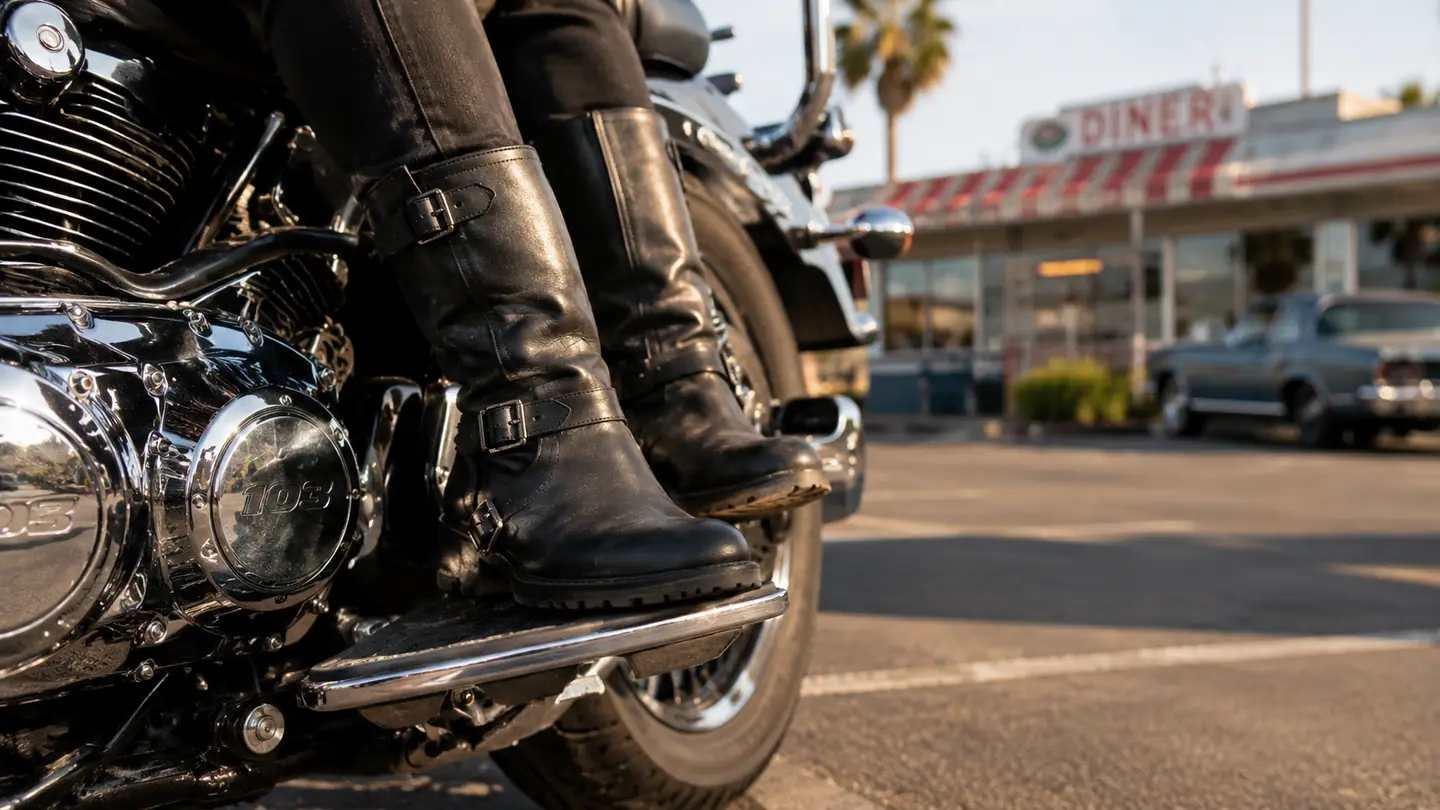
If you ride a Harley-Davidson, you have probably stood in front of the boot display and asked the same question I did: what is the actual difference between the Eda boots and the Harness boots? They look related, they share the same brand, and both are aimed at riders who want something that works on the bike and still looks right at a diner. After about 22 years of riding, most of it on my Heritage Softail, I have owned and worn both. Here is the honest comparison.
The short answer: the Harley-Davidson Eda boots are the easier everyday choice, with a zipper, a lower heel and a more flexible mid-calf fit, while the Harness boots are the more traditional, more structured option with the classic buckle strap and a chunkier feel. One is not better than the other. They are built for different days in the saddle.
| Harley-Davidson Eda Boots | Harley-Davidson Harness Boots | |
|---|---|---|
| Closure | Full side zipper, easy on and off | Buckle strap over the ankle, no zipper |
| Heel | Low 1 to 2 inch heel, stable on pegs | Lower block heel, classic profile |
| Fit through the calf | Mid-calf height with a more forgiving fit | Mid-calf height with a more structured shape |
| Break-in | Short break-in, comfortable quickly | Longer break-in, stiffer out of the box |
| Style | Clean, modern cruiser look | Traditional harness look with visible strap |
| Best for | Everyday riding, quick trips, long highway days | Riders who want the classic harness silhouette |
Where the Harley-Davidson Eda Boots Win
The Eda boots win on convenience, and convenience matters more than most riders admit. The full side zipper means I can get them on and off in seconds, which is the difference between stopping for gas and actually taking a break, or getting caught in a sudden Central Valley shower and being able to peel them off fast when I get home. The low 1 to 2 inch heel also feels natural on the floorboards of my Heritage Softail. I never feel like my foot is tilted forward, and walking around a rally or a diner afterward is not a wobbly experience.
Comfort is where the Eda really separates itself. The mid-calf height gives good coverage without feeling like a stiff tube around your leg, and the break-in period is short. I wore mine on a weekend ride within the first week and only felt the usual new-boot snugness, not the painful hot spots I have dealt with in other boots. For a rider like me, with a bit of lower-back stiffness on long days, the lighter feel and easier movement of the Eda boots make a real difference by hour five.
Weight is part of it too. When I pick the two boots up side by side, the Harness boots feel noticeably heavier, and that difference shows up at the end of a long day. Swinging a leg over the Heritage Softail forty or fifty times on a day of short stops is not nothing, and neither is walking around a rally or a small-town festival for a couple of hours. With the Eda boots I finish the day with tired legs. With the heavier Harness boots I have finished days with an ache that runs from my ankle up into my calf. For a rider who also spends a lot of time off the bike at stops, that matters.
Let me give you a specific day. Last October, Ray and I met the riding club at the usual spot in Tehachapi at 7:30 in the morning. I had on the Eda boots, a pair I had owned for about three weeks at that point. We did the loop down through Frazier Park and over to the coast, about 280 miles door to door, with a long lunch stop in Santa Barbara. By the time we rolled back into Bakersfield just after dark, my feet were warm, dry and only mildly tired. That is the test that matters to me: not how a boot feels in the store, but how it feels at mile 240 on a day that started before sunrise.
The zipper is the detail I did not expect to care about as much as I do. My old pair of riding boots had laces, and every time I stopped for gas I had to decide whether it was worth the two minutes to untie and retie them. With the Eda boots, I just pull the zipper down, let my foot breathe for a minute, and zip back up. On a long day with four or five stops, that adds up to real time and real comfort. The zipper pull is also easy to grab even with riding gloves on, which I tested on a cold morning ride in January when I did not want to take my gloves off at all.
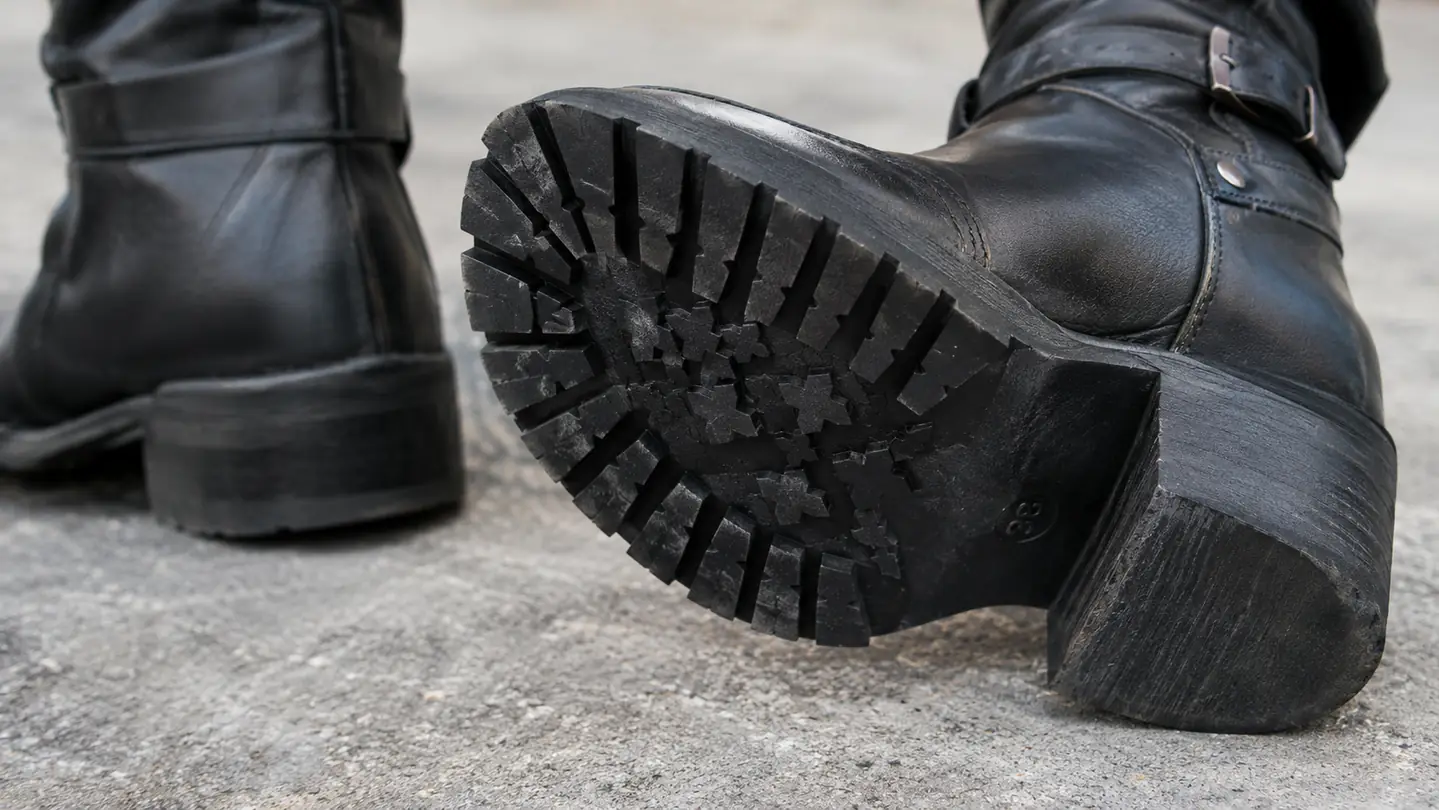
There is one more thing about the Eda boots that surprised me, and it is the sole. The tread is not overly aggressive, but it has enough bite that I have never had a foot slip on wet pavement or on the metal grate of a bridge deck. I remember one damp morning on the 58 east of Bakersfield, just after a light rain, and I put my foot down at a stoplight on a painted crosswalk. The boot held its ground without any drama. That kind of quiet confidence is easy to overlook in a review, but it is exactly what you want when you are two hours from home and the weather turns.
The Eda boots are the ones I reach for on a normal riding day
If you want a Harley-Davidson boot that is easy to live with, comfortable from the first week and still looks right on and off the bike, the Eda boots are the practical pick. Check today's price on Amazon to see if they are in your size.
Amazon Check Today's Price on Amazon →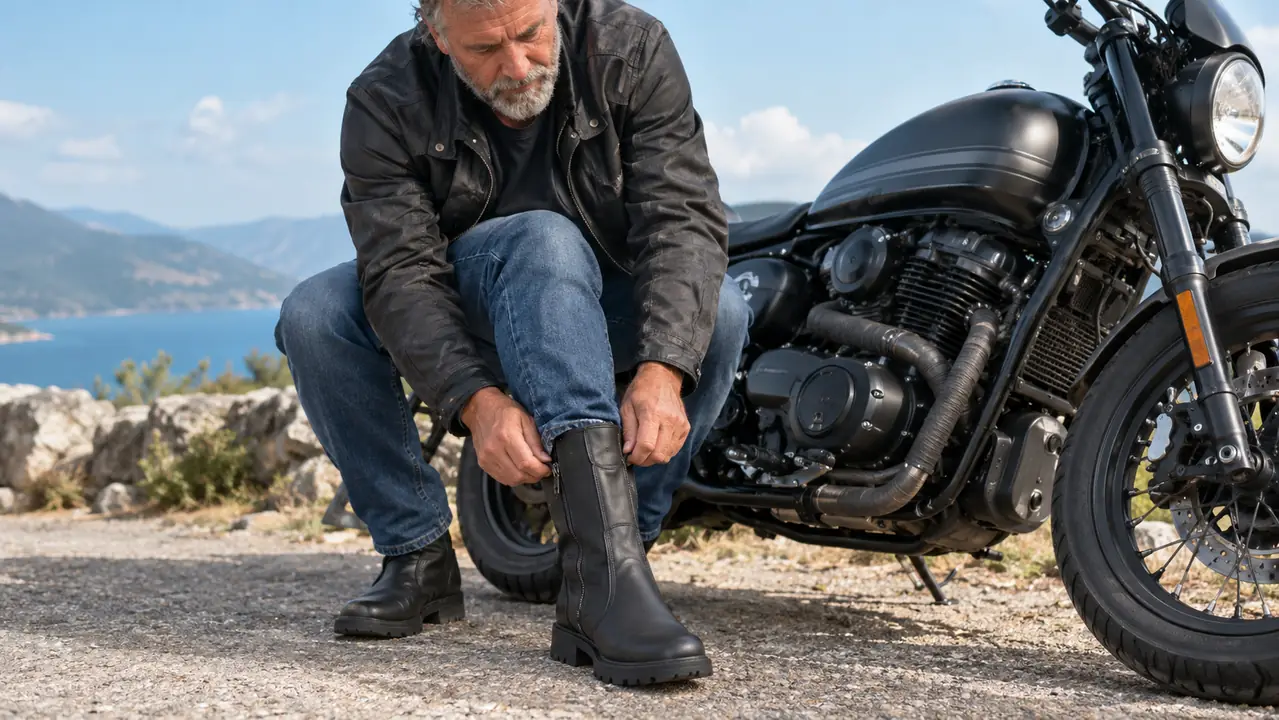
Where the Harness Boots Win
I will be straight with you: the Harness boots win on looks. The visible buckle strap across the ankle is the classic Harley-Davidson silhouette, the one you see in old photos and at every bike night. If the style is the whole point for you, the Harness boots deliver something the Eda boots do not. They also have a more structured shape through the calf, which some riders prefer because it feels more substantial and holds its form over years of use.
The tradeoff is that the Harness boots are stiffer out of the box and take longer to break in. The strap adds character, but it also adds a step every time you put them on. For a rider who wants the traditional look and does not mind a longer break-in, the Harness boots are the right call. For me, they are the boots I wear when I want the full classic look, not the boots I grab for a 300-mile day.
I want to be fair here, because the Harness boots have their own kind of comfort once they settle. My pair took about six weeks of steady wear before the leather relaxed around my ankle, and after that they became noticeably more comfortable. The structured calf also means the boot stays put when you are walking on uneven ground, like the gravel lot at the Kern River rally. There is a reason this style has been around for decades: it is a proven shape that a lot of riders genuinely prefer.
Where the Harness boots lose me is the daily routine. There is no zipper, so you work the strap and then pull the boot on by hand. That is fine on a Saturday morning when you have time, but it is a different story on a Tuesday evening when you just want to get home. I also found the chunkier sole transmits a bit more engine vibration through the footpeg on my Softail, which is not a problem on short rides but gets old on a long freeway stretch. If you mostly ride shorter distances and you love the look, none of that will bother you.
Here is the routine with the Harness boots, so you can picture it. Sit down on the bench in the garage, work my foot into the shaft, push down with the heel, wiggle, and sometimes reach for a boot horn. Taking them off at the end of the day is the same struggle in reverse, usually with Ray holding the heel while I pull. At a motel on a trip, after eight hours on the bike, that is the last thing I want to deal with. With the Eda boots I unzip, step out, and I am done. It sounds like a small thing until you do it twice a day for a week.
Let me give you a concrete example of that break-in, because it is the thing most people underestimate. When my old Harness boots were new, years ago, for the first two weeks I could only wear them for short hops: the post office, the grocery store, a 20-minute loop around the neighborhood. The leather across the instep was genuinely stiff, and I had a red mark on my ankle bone after the first full day. I almost gave up on them. Then, somewhere in the fifth week, I wore them on a club ride to the Kern River rally and forgot I had them on by the time we parked. That is the arc: rough start, then a boot that molds to your foot and looks better with every scuff.
Who Should Buy Which
Buy the Harley-Davidson Eda boots if you ride often, value easy on and off, and want a boot that feels comfortable from the first week. They are the better choice for everyday street riding, commuting, group rides and the longer multi-day trips I do a couple of times a year. The zipper, the lower heel and the forgiving fit make them the most practical all-around boot in this comparison.
Buy the Harness boots if the classic look is the priority and you are willing to put in the break-in time. They are a great choice for shorter rides, bike nights and riders who want that traditional harness silhouette. If you are torn, think about your average riding day. My average day is a Saturday group ride with a stop for breakfast, and the Eda boots are what I actually wear.
If you do go with Harness boots, give yourself a real break-in plan. Wear them around the house and on short errands for two or three weeks before you take them on a long ride, and wear thicker socks during that stretch to protect your heels. Expect some soreness at first, and do not judge them until they have softened up. Plenty of riders love their Harness boots once they are broken in and would not trade them. I am just not willing to go through that again when the Eda boots felt good from the first week.
One more thing worth saying: sizing is not identical between the two. The Eda boots run true to size for me, and I wear my normal street shoe size in them. The Harness boots fit snugger through the instep when they are new, so if you are between sizes, I would size up and wear a thicker sock during the break-in. That is the kind of detail that does not show up in the product photos but makes a real difference in whether you reach for a boot or leave it in the closet.
And if you are still on the fence, here is the question I ask myself: which boot do I want to be wearing at mile 200 of a long day? For me, that answer is always the Eda. The Harness boots are a great second pair, the ones I keep for bike nights and shorter rides when the look matters most. But for the riding I actually do, week in and week out, the Eda boots are the ones that earn their place by the door.
Still deciding? Start with the boots that fit your riding week
The Harley-Davidson Eda boots are the ones I recommend for most riders, especially if you ride more than once a week. See today's price on Amazon and check the sizing notes before you order.
Amazon Check Today's Price on Amazon →