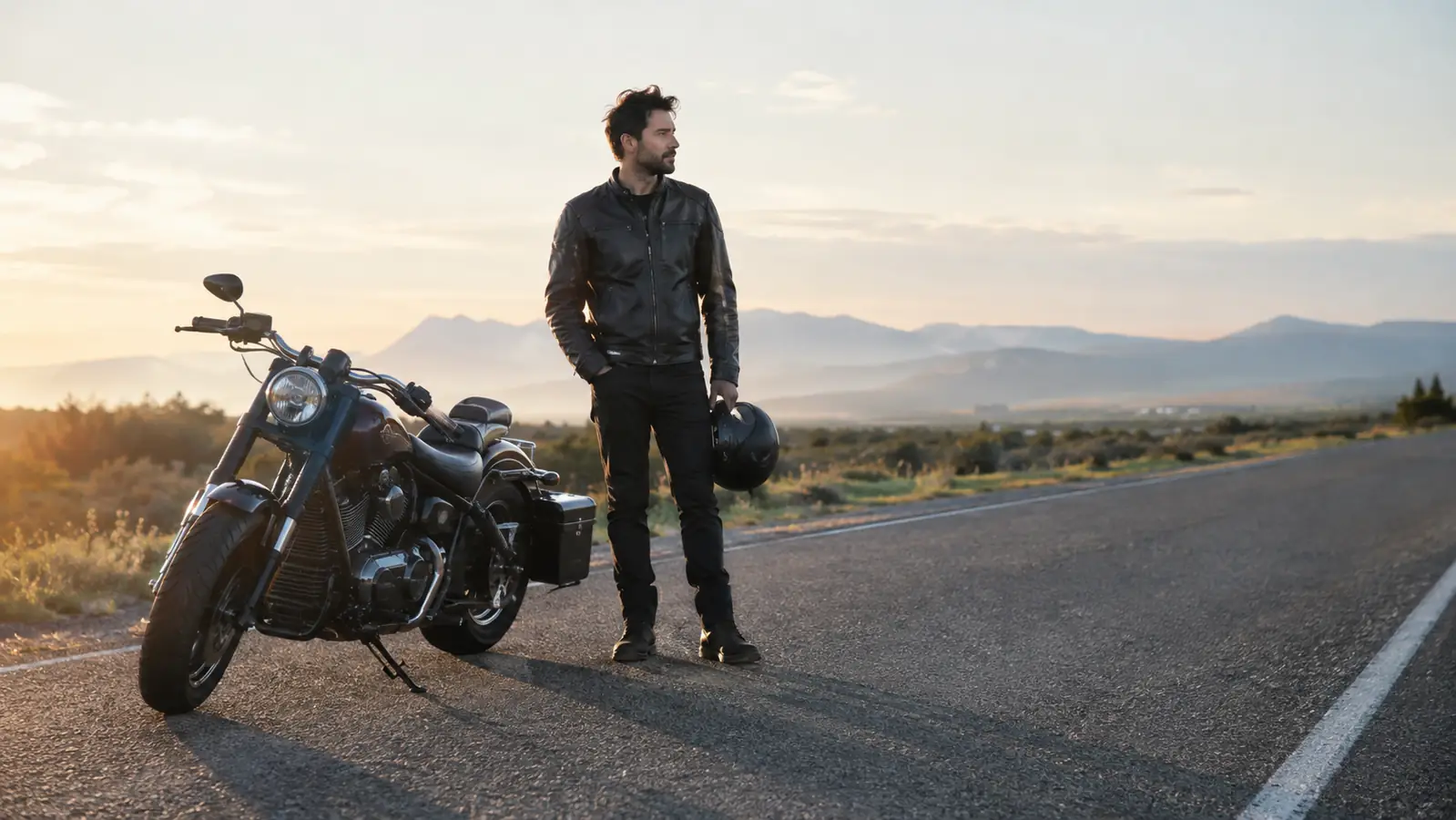
I have ridden for about 22 years, most of them on my Harley-Davidson Heritage Softail, and for the first several of those years I treated boots as an afterthought. I wore whatever was comfortable in the closet, told myself the footpegs did most of the work, and figured a sturdy sneaker was close enough. Then a long weekend ride through the Central Valley in July taught me otherwise. By the time I got home, my ankles were sore, my feet were cooked, and I finally understood what the riders who showed up in proper boots had been trying to tell me. Good riding boots are not a fashion statement. They are the difference between a ride you enjoy and a ride you just survive.
The boots I keep coming back to for everyday cruiser miles
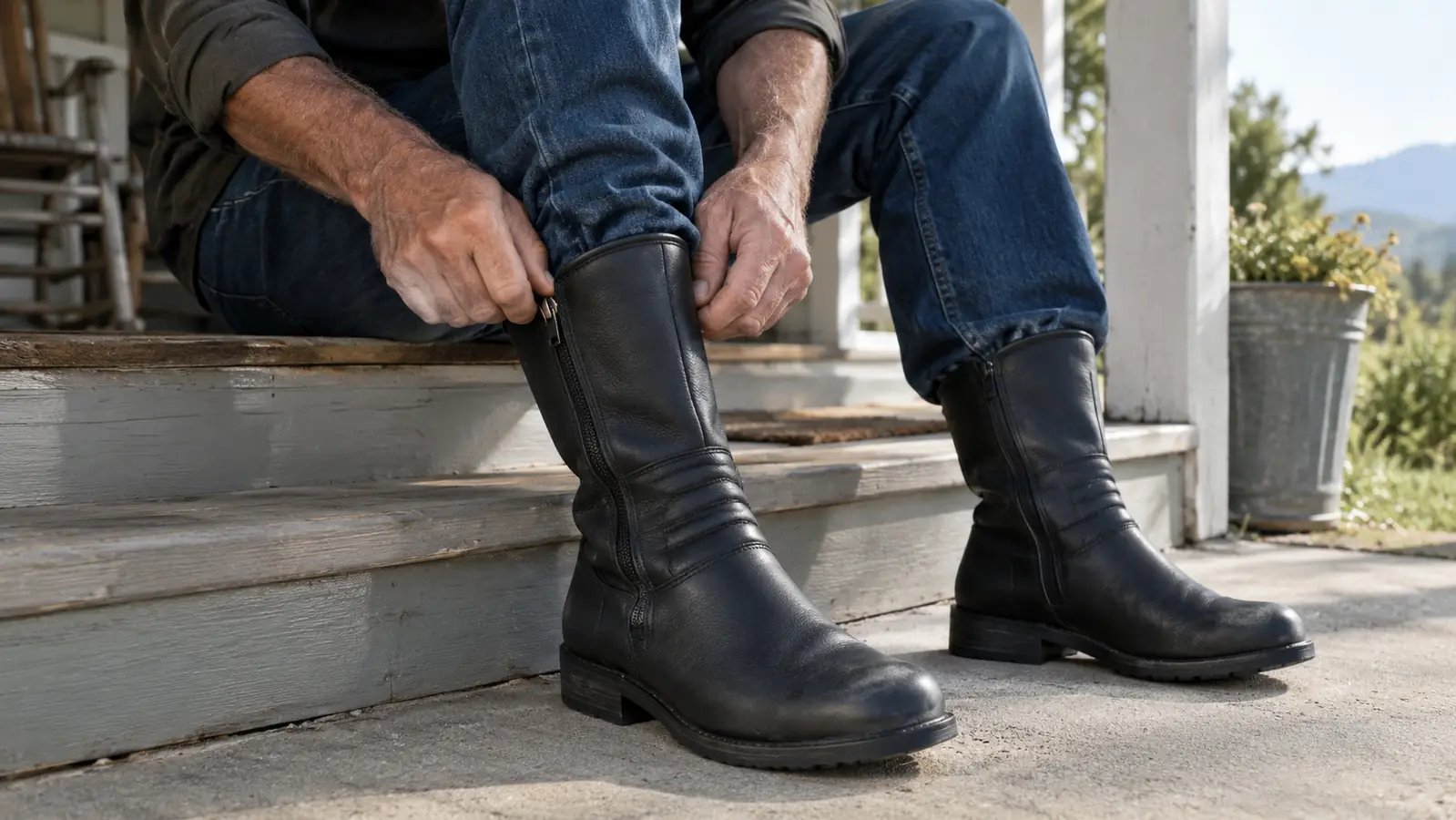
After years of trying different styles, the Harley-Davidson Eda boots are the pair I reach for most often for street rides and short tours. They zip on fast, feel broken in from the first day, and hold up mile after mile.
Amazon Check Today's Price on Amazon →Your feet are your connection to the bike
Shifting, braking, and holding the bike steady at a stop all happen through your feet. A boot with a stiff enough sole and a decent heel lets you feel the controls without guessing. With flimsy shoes, I found myself hunting for the shifter and never quite trusting the rear brake. With a real riding boot, the controls are right where they should be, every time. On my Heritage Softail, the shifter sits high enough that a thin sneaker sole left me lifting my whole foot to find it. The first morning I rode in the Eda boots, I caught the shift lever on the first try without looking down, and that small thing changed how relaxed I felt for the rest of the day.
Ankles take the worst of a low-speed drop
Most of us never crash at speed. We drop the bike in a parking lot, or put a foot down on a patch of gravel, and the ankle is what pays for it. A boot that covers the ankle beats sneakers every time, and if crash protection matters most to you, look for a CE-rated motorcycle boot with ankle armor. I have seen too many riders limp through a season after a silly low-speed tip-over in sneakers. A friend of mine from the riding club caught a curb at a gas station last spring, and the only reason she walked away with a bruise instead of a sprain was the tall boot she happened to be wearing. I thought about that for the rest of the season every time I laced up something flimsy.
Heat rises off the pavement, and your feet feel it first
On a 95-degree day in Bakersfield, the asphalt radiates heat straight up through the floorboards. A thin sneaker sole turns your foot into a heat sponge. A boot with a real sole and some insulation keeps the heat off long enough for you to enjoy the ride instead of counting the miles to the next stop. I remember one August ride to a rally where the thermometer on a bank in town read 101. My sneakers were soaked through by the time we stopped for lunch, and the soles felt soft as putty. The next weekend I rode the same route in the Eda boots and my feet stayed comfortable the whole way. That contrast is what sold me.
A proper heel keeps your foot from slipping on the peg
Cruiser pegs are wide and forgiving, but your foot still shifts around on long stretches. A boot with a defined heel gives your foot something to lock against. I noticed the difference immediately on my Heritage Softail: less fiddling, more time watching the road. On a 300-mile day, that adds up. I used to stop every couple of hours to reposition my foot, and each stop broke the rhythm of the ride. With the Eda boots, my foot stays put for hours at a time, and I get off the bike feeling like I actually rode instead of wrestled it.
Zippers beat laces when you are in a hurry
There is a reason so many riders end up with zippered boots. You can pull them on in seconds, no double-knotting, no laces coming loose at a gas stop. The Eda boots have a full side zipper that has held up for me through about a year of regular weekend rides. I have also learned to tuck the zipper pull flat so it does not catch on the shift lever, a trick that took me exactly one ride to figure out. When the group is ready to leave at 7:30 in the morning, I am not the one holding everyone up.
Boots protect you from the bike itself
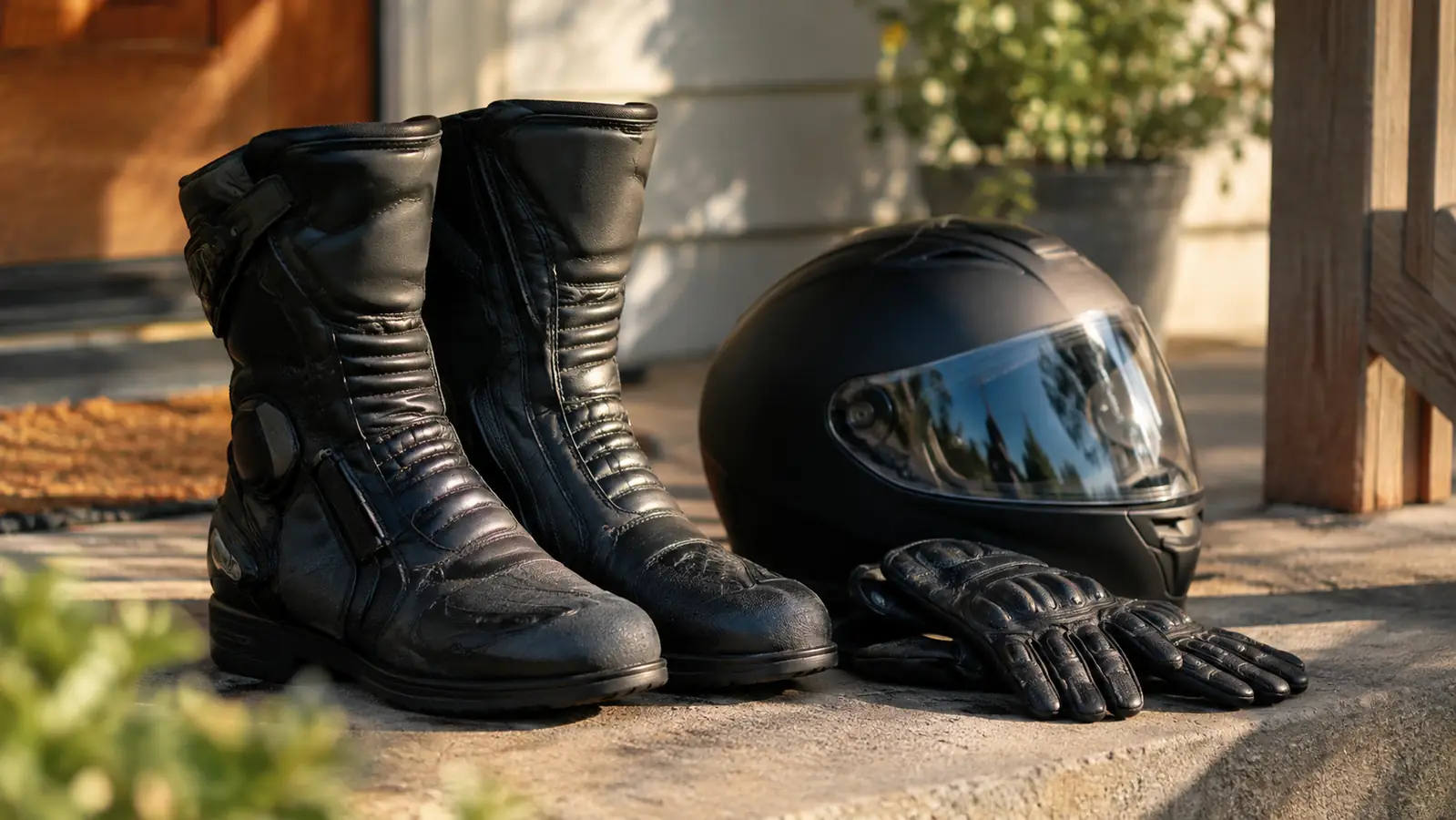
The exhaust, the kickstand, the pegs, the shift lever. A cruiser has a dozen hot and hard edges waiting for an unprotected foot. I have burned an ankle on a passenger peg and dropped a kickstand on a bare foot, and neither is a lesson you want to learn twice. Sturdy leather keeps your skin off the hot pipes and hard edges, though a casual boot is not a substitute for certified crash protection. The leather on the Eda boots has a few scuffs from exactly those moments, and my skin never paid for any of them. That is what the gear is for.
All-day comfort is a function of the sole, not the brand
The best boot in the world is useless if your feet ache after two hours. What matters is a sole that absorbs vibration, a footbed that supports your arch, and a shaft that does not rub your calf raw. The Eda boots have a cushioned insole and a mid-calf shaft that I have worn for full days without thinking about my feet. On a recent three-day trip down the coast, I wore them from breakfast to dinner each day, and the only time I took them off was to sleep. My lower back still complained a little at the end of the day, but my feet never did.
Rain and morning dew are not optional in California
Even in the desert, you will hit a wet patch. A leather boot with a proper sole sheds water far better than a canvas sneaker, and your feet stay dry when the road is damp. I have ridden through a short sprinkle on the way to a rally and arrived with dry socks, which is more than I can say for my old sneakers, though a long soaking rain will get through any leather boot that is not waterproof. That same morning, the dew on the grass at the fairgrounds soaked every sneaker in the parking lot. I walked around dry-footed all day, and it is a small thing that makes a big difference when you are on your feet at an event.
They last longer than three pairs of cheap shoes
I used to replace cheap sneakers every season. The soles wore out, the fabric tore, and I never felt like I was getting ahead. A well-made boot costs more up front, but it holds its shape, takes a polish, and stays in service for years. Over time, the math works out in favor of the boot. I have had my Eda boots for about a year now, and aside from normal scuffs on the toes, they still look and fit the way they did the week I bought them. My old sneakers would have been in the trash by now.
They make you feel like a rider, and that matters
I am not going to pretend gear is all about safety. There is a moment when you pull on a good pair of boots, zip them up, and stand a little taller. You feel ready for the road. That feeling is part of why we ride, and a good pair of boots delivers it every single time. I have owned boots that felt like a chore to put on, and boots that felt like the start of an adventure. The Eda boots are the second kind. When I zip them up on a Saturday morning, the ride has already begun.
What I'd Skip
If you only ride a few times a year, in perfect weather, on short loops near home, you can probably get by with whatever sturdy footwear you already own. I would skip spending on dedicated riding boots until the miles add up. I would also skip any boot that does not fit well, no matter how good the reviews are. A boot that pinches or rubs will sit in the closet, and a boot in the closet protects nothing. Try them on with the socks you actually ride in, walk around the house for an hour, and be honest with yourself before you commit.
The first time I rode a full day in the Eda boots, I got home and realized I had not thought about my feet once. That is the whole point.
Ready to give your feet a proper upgrade?
The Harley-Davidson Eda boots are the pair I recommend to friends who want a comfortable everyday leather riding boot that is easy to live with. See today's price on Amazon and decide for yourself.
Amazon Check Today's Price on Amazon →