
I have a confession to make. For the first few years I rode, I treated boots like an afterthought. I wore whatever was in the closet, usually a pair of old sneakers or thin leather ankle boots, and told myself it was fine because I was only going to the diner and back. Then a friend of mine went down at a stop sign in sandals, and I finally got serious about real riding footwear. That is how I ended up in the Harley-Davidson Eda boots, and after about a year of weekend rides, one long highway trip, and a whole lot of Central Valley heat, I have opinions.
The short version: these are the boots I reach for more than any other pair I own. They are not the most protective boot Harley-Davidson makes, and they are not the stiffest, but they are the ones that actually get worn, which matters more than you might think. Here is the long version.
The Quick Verdict
A comfortable, well-made mid-calf casual riding boot that holds up to daily riding. Not a certified protective boot. Not for hard-core track days or serious off-road, but ideal for street and touring riders who want to look good and stay comfortable.
Amazon Check Today's Price →The boots I actually wear every ride
After a year of testing, the Harley-Davidson Eda boots are still my first pick for street and touring rides. Check today's price on Amazon and see if they fit your size.
Amazon Check Today's Price on Amazon →How I've Used It
I ride a Harley-Davidson Heritage Softail, and I have been riding for about 22 years now. Most of my miles are weekend group rides with a small local club, plus one or two longer multi-day trips a year on highways in California and neighboring states. I live in Bakersfield, so I also deal with real heat. Summer rides mean 95 degrees by noon, and I have learned the hard way that gear I won't wear in that heat is gear that stays in the garage.
I bought the Eda boots in the spring and wore them on everything from a quick 20-mile breakfast run to a 400-mile weekend loop through the Sierra foothills. I wanted to know three things: whether they would break in without a miserable month of blisters, whether they would stay comfortable on a full day in the saddle, and whether they would hold up to the scuffs, heat, and general abuse of real riding. I also wanted to know if the zipper, which is the part that usually fails on boots like this, would survive daily use.
I kept notes for the first few months, mostly because I did not trust my memory. I am glad I did, because the story of these boots is a story of slow improvement. They were good on day one and great by day thirty.
Those notes were not fancy. After each ride I wrote down the date, roughly how far we went, the temperature, and anything my feet told me. A typical entry from early summer reads something like: two hundred miles, ninety-four degrees by mid-afternoon, feet tired but no hot spots, left zipper a little stiff. Looking back over them is how I know the comfort was consistent and not just a good first impression. The entries that mention sore feet are almost all from days when I wore thick cotton socks instead of thin wicking ones, which taught me as much about socks as it did about boots.
Fit and Break-In: No Blister Month Here
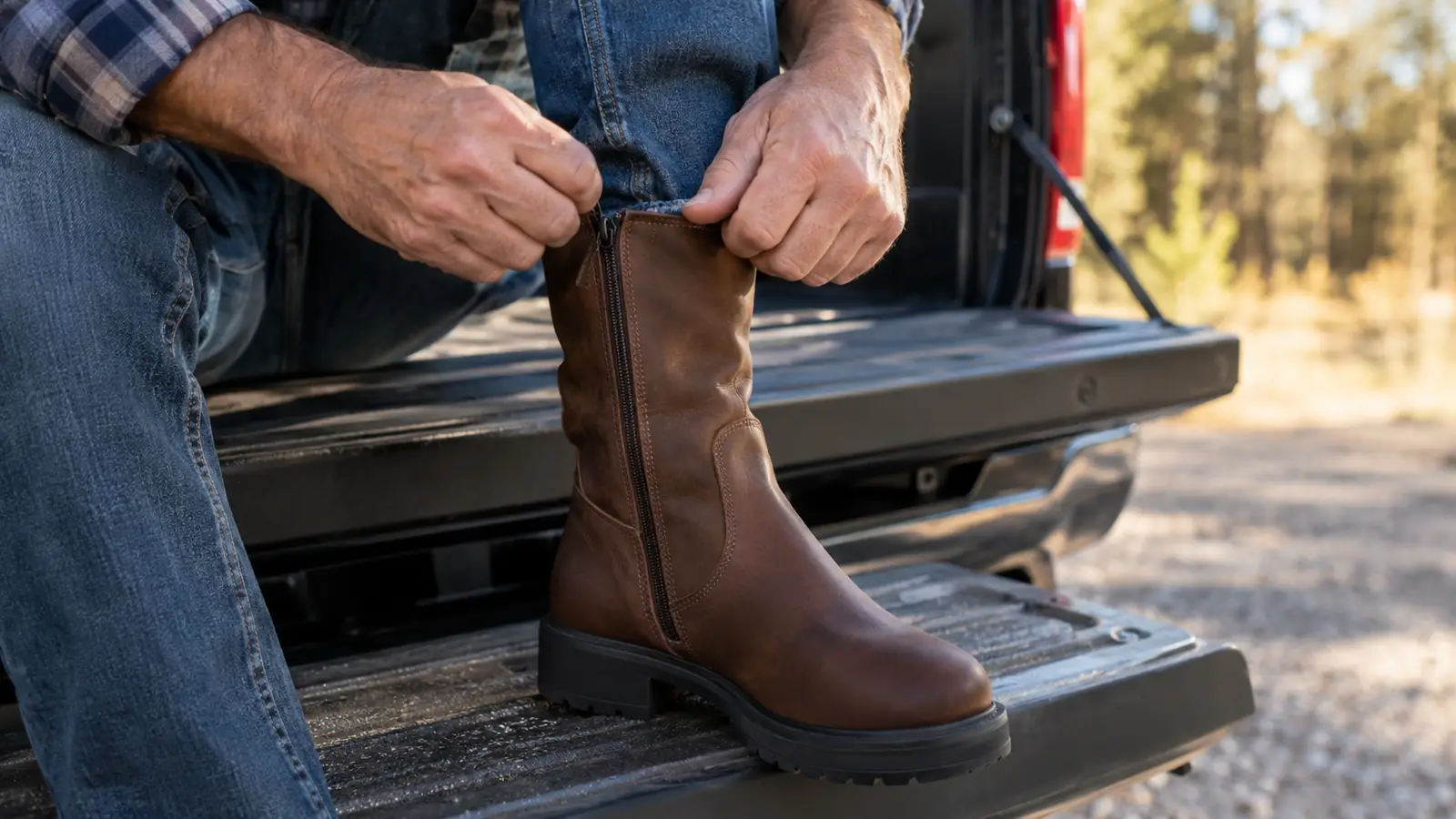
The first thing I noticed was the fit. The Eda boots run true to size for me, which is not something I can say for every boot I have tried. I wear a women's 8.5, and the 8.5 fit with a normal-weight sock. If you like a thicker sock for cooler mornings, you might want to size up half a size, but I would not size up preemptively. The mid-calf shaft is snug without being tight, and the low heel, about an inch to an inch and a half, is low enough that I never felt like I was walking on a wedge.
Break-in was genuinely easy. I wore them around the house for a few evenings, then did a short ride, and after about a week of short rides they felt like they had been mine for years. The leather is soft enough to mold to your foot without turning into a floppy mess. I have had boots that required a month of suffering before they became wearable, and these were not those boots.
One thing to know: the zipper is on the inside of the boot, which is a little unusual. It took me a couple of tries to get the hang of it, but once I did, it became my favorite part of the design. You can get the boots on and off without untying anything, which matters when you are standing in a dusty parking lot after a long ride and your fingers are tired.
Comfort on Long Rides and in Real Heat
Here is where the Eda boots really won me over. On a full day in the saddle, my feet stayed comfortable. I have lower-back stiffness on long days, and I have learned that foot comfort is part of that equation. When your feet are cramped or sliding around, your whole body tenses up. These boots have enough structure that my feet stayed put on the pegs, but enough flex that I could move them when I needed to.
The heat is the other test. Bakersfield summers are brutal, and I have worn these boots in 100-degree weather without wanting to take them off at the first gas stop. They are not mesh sneakers, obviously, but the leather breathes better than I expected, and the low heel means my foot is not jammed into an unnatural position. On the hottest days, I still noticed the heat, but I did not feel like my feet were cooking.
One afternoon in July we stopped for lunch in a town where the parking lot thermometer read over a hundred. I walked around for nearly an hour, in and out of a diner and a couple of shops, and my feet were warm but not miserable. The leather does hold heat when you are standing still in direct sun, so I make a point of parking in the shade when I can. On the bike, with air moving, it is a different story. The Eda boots never felt like they were cooking my feet the way my old tall boots did, which mattered to me more than almost anything else on the list.
I also wore them on a drizzly morning once, and they handled it fine. The leather is not waterproof, so I would not wade through a creek in them, and while a light drizzle did not soak through, a longer shower will. I let them dry slowly at room temperature and they were ready to go the next day.
After a year of riding, the zippers still work smoothly, the soles still grip, and the leather still looks like a boot that has lived a good life, not a boot that has fallen apart.
Protection: What They Are and Are Not
Let me be honest about what these boots are not. They are not a race boot. They do not have a hard ankle cup or a reinforced toe box, and if you are doing track days or aggressive canyon carving, you should look at a taller, stiffer boot with more armor. They are a casual leather riding boot with no safety rating, so think of them as coverage, not crash protection.
The shaft covers your ankle and the lower part of your shin, which also keeps your skin away from hot pipes and engine parts. The leather is substantial, not costume-thin, and the sole has a real tread pattern that grips the peg and the ground. The low heel means your foot is less likely to catch on something in a get-off, and the full coverage means you are not riding in open-toed shoes or flimsy fashion boots.
I will say it plainly: these boots are a big step up from sneakers or fashion boots, but if crash protection is your priority, a CE-rated motorcycle boot with ankle armor is the safer choice. They are a comfortable everyday riding boot, and I wear them knowing exactly what they are and what they are not.
Durability: A Year of Real Use
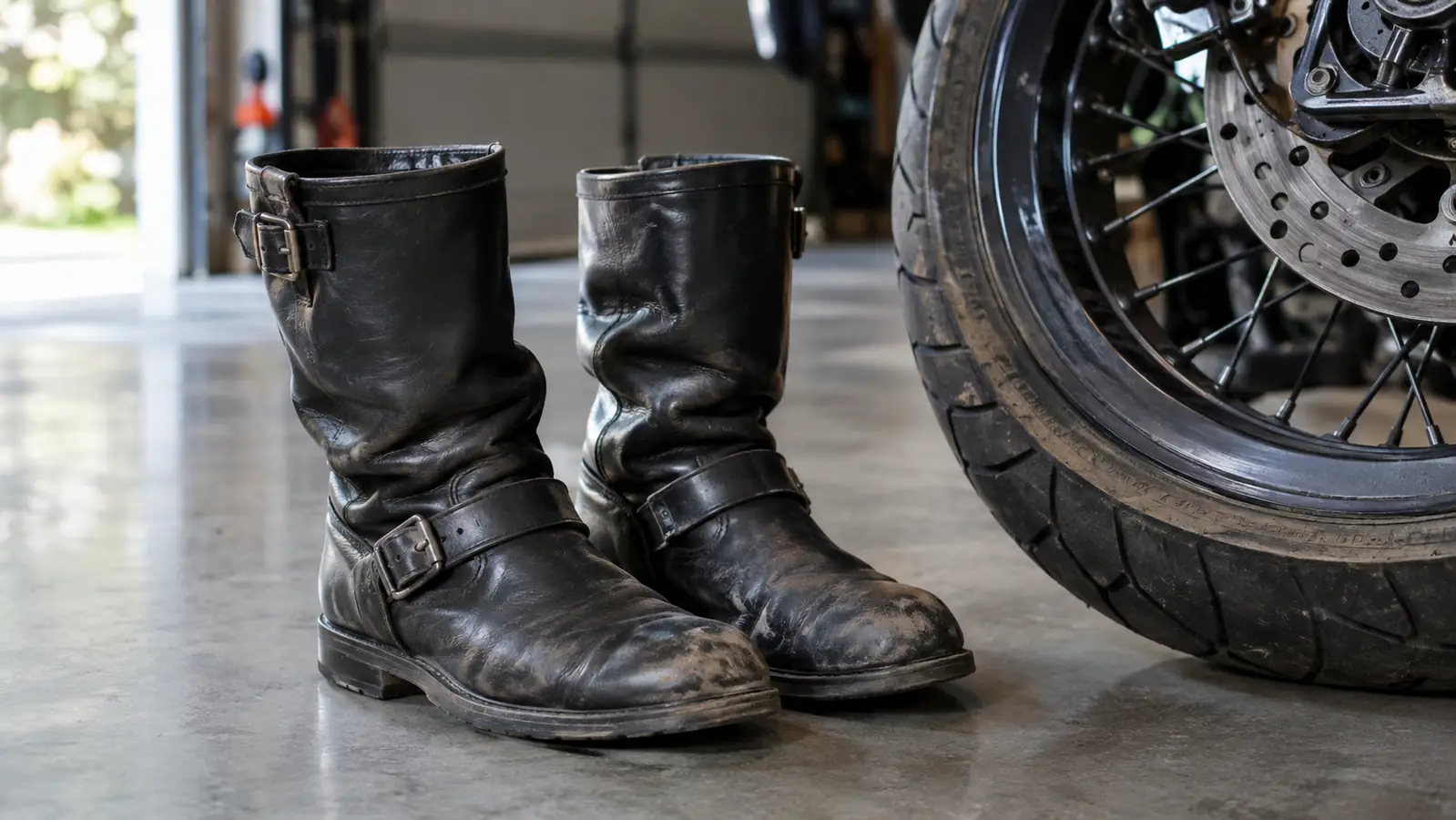
I am hard on boots. I walk around gas stations, stand on gravel, kick the kickstand, and generally treat them like work boots. After a year, the Eda boots have some honest scuffs on the toes and a few creases across the instep, but there are no loose seams, no peeling soles, and no broken zippers.
The zipper was my biggest worry, because it is the part that usually fails on a boot like this. I have had zippers on other boots that started catching and skipping within a few months. These have stayed smooth through hundreds of cycles. I do not baby them, either. I yank them open and closed with dirty hands, and they have not complained once.
The soles are still in good shape with no visible wear through the tread, and the leather has not cracked or dried out despite the heat. I clean them occasionally with a damp cloth and a little leather conditioner, and they look presentable enough for a nice dinner after a ride. That is more than I can say for some boots I have owned that cost more.
The grip has been the quiet win. I have stood on oily gas station concrete, wet painted lines at intersections, and the loose gravel shoulders that seem to be at every scenic pullout in the Central Valley, and I have not had a scary slip yet. When you are holding up a heavy cruiser at a stop, your foot planting where you put it is everything. I also clean and condition the leather a few times a year with a basic leather conditioner, which takes ten minutes, and I think that is a big part of why the uppers still look good rather than dried out and cracked.
What I'd Change
No boot is perfect, and these have a few quirks. The inside zipper takes getting used to, and if you have very wide calves, the mid-calf shaft might feel snug. I have average calves and they fit fine, but I would not recommend them for someone with significantly wider calves without trying them on first.
The leather is not waterproof, so if you ride in heavy rain regularly, you will want a dedicated waterproof boot for those days. And while the low heel is comfortable, it does not give you the same feel on the peg as a stiffer, more purpose-built touring boot. For my riding, that trade-off is worth it. For someone who wants maximum feel and maximum protection, it might not be.
What I Liked
- Easy break-in with no blister month
- Comfortable all day, even in 100-degree heat
- Zipper makes them quick to get on and off
- Real leather that holds up to daily use
- More ankle and shin coverage than fashion boots
- Low heel is stable for walking and riding
Where It Falls Short
- Not waterproof
- Inside zipper takes getting used to
- Not enough armor for track days or serious off-road
- May run snug for wide calves
Who This Is For
The Harley-Davidson Eda boots are for the rider who wants a boot that does everything well. If you ride a cruiser or a touring bike, if you do weekend rides and the occasional multi-day trip, if you want something that looks good at the diner and is comfortable all day on the highway, these are a strong choice. They are also great for the rider who is tired of fighting with laces, because the zipper makes them genuinely easy to live with.
I would especially recommend them to women who are newer to riding and want one pair of boots that will work for most situations. They are forgiving and comfortable, and if you want certified crash protection, pair that priority with a CE-rated boot instead. They are the boots I hand to a friend who asks what she should buy first.
Who Should Skip It
If you are doing track days, serious off-road riding, or aggressive canyon carving, you need a taller, stiffer boot with more armor. These are not that boot. If you ride in heavy rain on a regular basis, you will want something waterproof. And if you have very wide calves or prefer a very stiff, race-style fit, these will probably not be your favorite.
Also, if you are looking for a fashion boot that just happens to be motorcycle-adjacent, these are more boot than you need. They are real riding gear, and they feel like it. That is a feature for most of us, but it is worth knowing before you buy.
Ready for a boot that does it all?
The Harley-Davidson Eda boots have earned their place in my garage. If they sound like the right fit for your riding, check today's price on Amazon and see what sizes are available.
Amazon Check Today's Price on Amazon →