
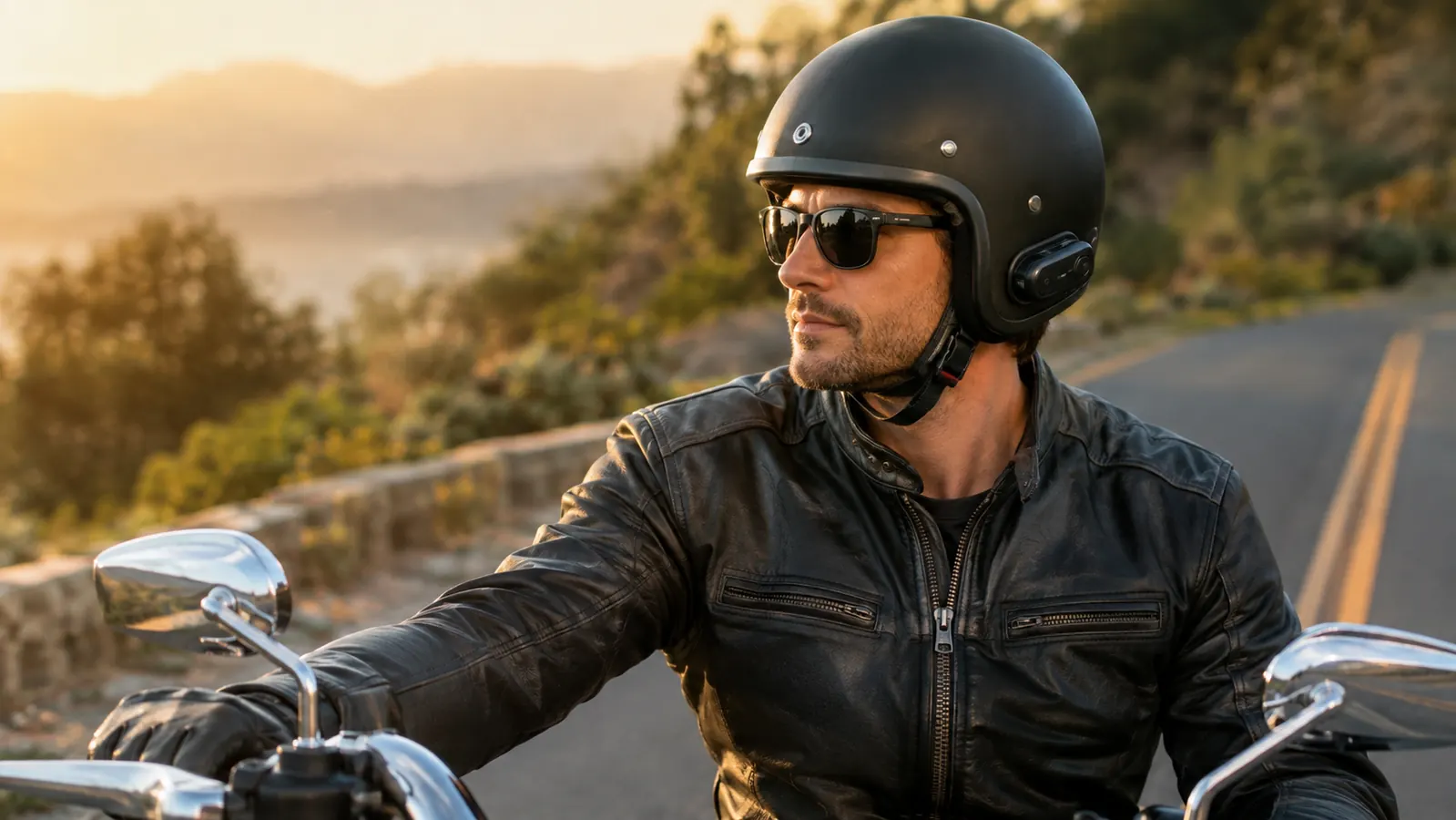
If you ride with friends, you already know the problem. You pull up next to each other at a stoplight and shout over the engine. You try hand signals for 'gas station' and 'turn ahead' and hope everybody got the same message. And on the long stretches, you ride alone with your thoughts even though your riding partner is right there beside you. That is exactly why I finally put a Cardo Spirit on my helmet, and after a full season of weekend rides with my club, I can walk you through the whole thing step by step.
I am Carla. I have been riding for about 22 years, mostly on my Harley-Davidson Heritage Softail, and I am the kind of rider who would rather talk to my friends than listen to music. The Cardo Spirit is the entry-level headset from Cardo, and it does one thing really well: it lets you talk to another rider, hands-free, up to about half a mile apart. It is not the fanciest unit Cardo makes, and it is not the loudest, but it is simple, waterproof, and it works. Here is how to set it up and actually use it on a ride.
Start talking to your riding buddies this weekend
The Cardo Spirit is the easiest way to add rider-to-rider communication to any helmet. It mounts in minutes, pairs in seconds, and handles wind noise well enough to actually hear your riding partner at highway speed.
Amazon Check Today's Price on Amazon →Step 1: Mount the Cardo Spirit on Your Helmet
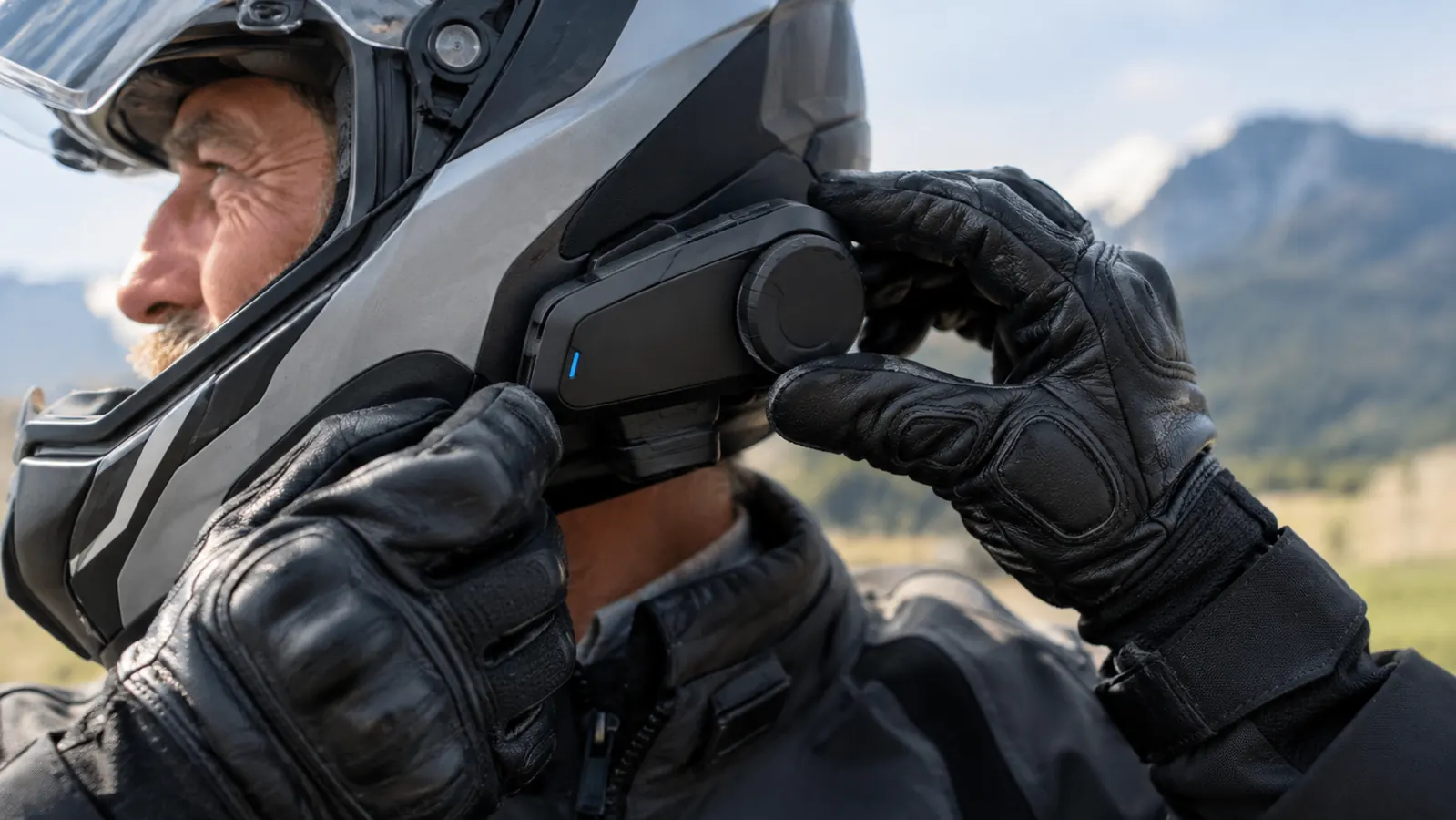
The first thing you will notice when you open the box is how small the Cardo Spirit is. The main unit is a slim pod that clamps onto the left side of your helmet shell, and the speakers are thin 32mm pads that sit inside the helmet lining, one over each ear. The whole thing weighs almost nothing, which matters on a long day in the saddle. I have worn mine on an eight-hour ride and forgot it was there.
The clamp is a simple two-piece design. You place the curved bracket against the outside of the helmet shell, then screw the backing plate in from the inside. It took me about ten minutes the first time, mostly because I was being careful not to scratch the paint. The clamp fits most helmets, including my half-shell and my full-face, and it does not rattle loose. I check it before every ride out of habit, and I have never had to tighten it.
One tip from my own fumble: route the speaker wires before you snap the clamp shut. The wires are thin and easy to tuck under the helmet liner, and if you do it in the right order, you will not be fighting with them later. The microphone boom is flexible, and you can bend it so the mic sits just in front of your mouth. On a half-shell, the boom is short enough that it does not get in the way when you take the helmet off.
Speaker placement is the step most people rush, and it makes the biggest difference in how well you hear. Put the helmet on, feel where your ear actually sits, and then mark that spot on the liner with a small piece of tape before you take the helmet off again. Stick the speakers on that mark, centered over the ear canal rather than a little high or a little forward. On my half helmet the first placement was about half an inch too far back, and voices sounded muffled at speed. Moving them forward fixed it completely. It takes five extra minutes, and it is the cheapest sound upgrade you will ever make.
Step 2: Charge It and Pair It With Your Phone
Before your first ride, give the Cardo Spirit a full charge. The charging port is a magnetic USB cable, which sounds like a small thing until you are trying to plug it in with gloves on. The magnet lines it up for you, and it clicks into place. A full charge lasts me about a week of weekend riding, and Cardo says you get up to 13 hours of talk time. I have never drained it in a single day, even on a long trip with the music playing between conversations.
Pairing with your phone is straightforward. You hold the main button until the LED flashes red and blue, then find 'Cardo Spirit' in your phone's Bluetooth settings. It takes about thirty seconds. Once it is paired, you can listen to music or navigation prompts through the speakers, and when a call comes in, you just tap the main button to answer. The voice prompts tell you what is happening, so you do not have to look at the unit.
The Cardo Spirit also pairs with the Cardo Connect app, which is free. The app is not essential, but it is useful for adjusting the audio balance and checking the battery level. I set mine up once and have barely opened it since. The unit remembers your phone, so it reconnects automatically when you turn it on.
Step 3: Pair With a Riding Buddy
This is the part people ask me about at the gas station, and it is easier than you think. The Cardo Spirit is a two-way intercom, which means it connects to one other Cardo unit at a time. To pair with a friend, you both put your headsets in pairing mode by holding the main button until the LED flashes red and blue. Then you tap the main button on one unit, and the two headsets find each other. It takes about ten seconds.
Once they are paired, the intercom connects automatically whenever you are both within range. You do not have to press anything to start talking. The moment you are close enough, you hear a tone, and you are live. My friend Deb and I pair up at the start of every ride, and we talk on and off for the whole day without touching the units.
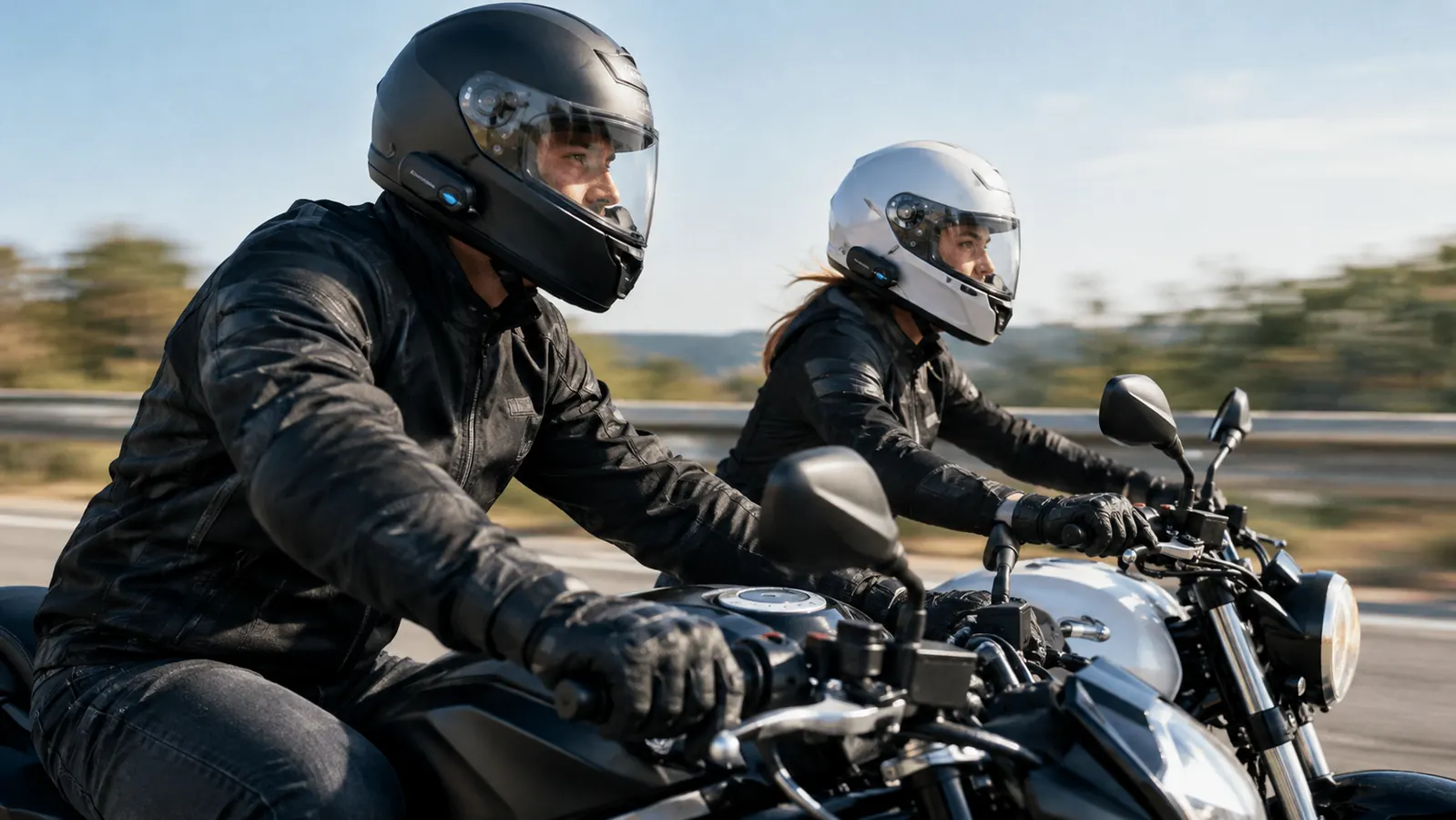
The range is about half a mile in open country, and less in town with buildings and hills. On a club ride, that means your partner a few bikes back stays in range, but if a long line of bikes opens up a big gap, the link can drop. The Cardo Spirit is not a mesh intercom, so it does not create a big group network like the pricier Cardo units. It is a one-to-one connection made for two riders, which is exactly how Ray and I use it.
In real group riding, plan your spacing around the intercom rather than the other way around. Ray and I found that a staggered formation a few seconds apart kept us connected all day, while letting a gap of a quarter mile open up on a winding canyon road was where the connection would fade and come back. If you lose each other, do not fiddle with the buttons while you are riding. Just close the gap a little and give it a moment, because the units will usually find each other again on their own. If it still does not reconnect, wait until the next stop to sort it out.
Step 4: Set the Volume and Learn the Buttons
Before you ride, put the helmet on and adjust the volume. The big jog dial on the side of the Cardo Spirit controls volume, and it is easy to find with gloves on. I set mine to about 80 percent for highway riding. Any louder and the wind noise starts to compete; any quieter and I miss what Ray is saying. The speakers are thin, so they do not press hard against your ears, but they are not the loudest speakers Cardo makes. At 70 miles an hour, I can hear Ray clearly, but I do have to concentrate a little more when the wind is strong.
The main button does most of the work. A quick tap answers a call or starts the intercom. A long press turns the unit on or off. The jog dial also lets you skip tracks if you are listening to music. It takes about one ride to get comfortable with the controls, and after that you can operate them without looking.
One thing I learned the hard way: the Cardo Spirit does not have voice control. You cannot say 'call Ray' and have it dial. You have to use the button. That is a tradeoff at this price, and it is worth knowing before you buy. If voice commands matter to you, you would need to step up to a more expensive Cardo model.
Step 5: Ride and Talk
Now for the fun part. On a club ride, the Cardo Spirit changes the whole experience for the two of us. Instead of shouting at a stoplight, you just talk. 'Gas up at the next exit?' 'There is a deer on the right.' 'That road we took last time is closed.' It makes the ride safer, because you are not taking your eyes off the road to figure out what your friend is signaling.
A little intercom etiquette goes a long way too. Agree on a few short phrases before you leave, like gas next exit, pulling over, or gravel ahead, so the important calls are quick and clear. Keep chatter light in heavy traffic and on technical stretches of road, when both riders need their full attention on the ride. And if someone needs quiet, it is fine to say so. On our club rides, the pairs who use their headsets this way are the ones who arrive relaxed, while the pairs who talk nonstop tend to arrive tired.
The microphone does a good job of filtering wind noise. Ray says I sound clear at highway speed, and I can hear him well enough to hold a conversation. The audio is not studio quality, and there is a little bit of that walkie-talkie compression, but it is perfectly understandable. For a unit at this price, I was honestly surprised at how clear it is.
The Cardo Spirit is also waterproof, which matters if you ride in the rain. I have been caught in a Central Valley downpour with mine, and it kept working. The controls are easy to use with wet gloves, and the unit never skipped a beat. That is the kind of reliability that makes me trust it on a long trip.
What Else Helps
A few things make the Cardo Spirit work even better. First, install it on the left side of your helmet if you are right-handed, so you can adjust it without taking your hand off the throttle. Second, pair with your regular riding partner before you leave the driveway, not at the first stop. Third, if you wear earplugs, the speakers still work fine, and they actually sound a little clearer because the earplugs cut the wind noise. I use foam earplugs on long highway days, and I can still hear Ray perfectly.
Another tip: keep the firmware updated through the Cardo Connect app. Cardo has improved the audio quality and battery life with updates, and the app makes it a two-minute job. And if you ride with a passenger, the Cardo Spirit works for that too. Ray and I have used it on the rare days we take one bike, and it is much nicer than yelling over the wind.
The moment you hear your friend's voice at 70 miles an hour, clear as if you were at a diner table, you will wonder why you waited so long to get one.
Get the Cardo Spirit and never shout over the wind again
It mounts in minutes, pairs in seconds, and holds a charge for a full day of riding. If you ride with friends, this is the easiest upgrade you can make to your helmet.
Amazon Check Today's Price on Amazon →