If you ride with a group, you already know the routine. Someone at the front spots a lane closure, and by the time the word reaches the back, half the group has already made the wrong move. Or you're on a two-up trip and you have to pull over every time you want to say anything more complicated than a hand signal. A helmet headset fixes all of that. The question is whether you need to spend Cardo money or whether one of those budget Bluetooth headsets you see on Amazon for a third of the price will do the same job.
I've spent the last few months riding with both. I put a Cardo Spirit on my own helmet for weekend rides with my club and a longer trip up the coast, and I borrowed a couple of the popular budget headsets to see how they held up on the same roads. The short answer: the budget headsets are not a scam, but they are a compromise, and you need to know exactly where the compromise lives before you save the money.
To keep it fair, I did not just ride around the block. I wore the Cardo Spirit on my half helmet for our club's Saturday rides and for one longer trip, and I put the budget headsets on the same helmet for the same kinds of rides, swapping them every couple of weeks. Ray did the same on his helmet so we always had a matched pair talking to each other. I paid attention to four things: how clear a voice sounded at highway speed, how long the battery lasted on a real day, how often the connection dropped, and how comfortable the speakers were after three or four hours. Those are the things that actually matter once the novelty wears off.
| Cardo Spirit | Budget Bluetooth Headset | |
|---|---|---|
| Price | Mid-range, with the brand name and support to show for it | Usually a third of the price, sometimes less |
| Speaker quality | Thin 32mm speakers with clear mids and enough volume at highway speed | Thinner sound, less headroom before distortion kicks in |
| Wind noise handling | Volume and mic gain hold up at 70 mph with a windscreen | Callers hear wind and road noise sooner, especially above 60 mph |
| Pairing and setup | Straightforward phone pairing, simple button logic after a day of use | Some units pair fine, others need a reset dance every few rides |
| Battery life | A full day of riding with music and intercom, charges overnight | Varies wildly; some die mid-ride, some last all day |
| Water resistance | Waterproof, rated for rain and washing the helmet shell | Some are water-resistant, some are not, and the listing is not always honest |
| Support and warranty | Real customer support and a warranty you can actually use | Often a seller that disappears or a warranty that means little |
| Best for | Riders who want it to work every ride without fiddling | Riders on a tight budget who mostly ride solo and rarely need the mic |
Where Cardo Wins
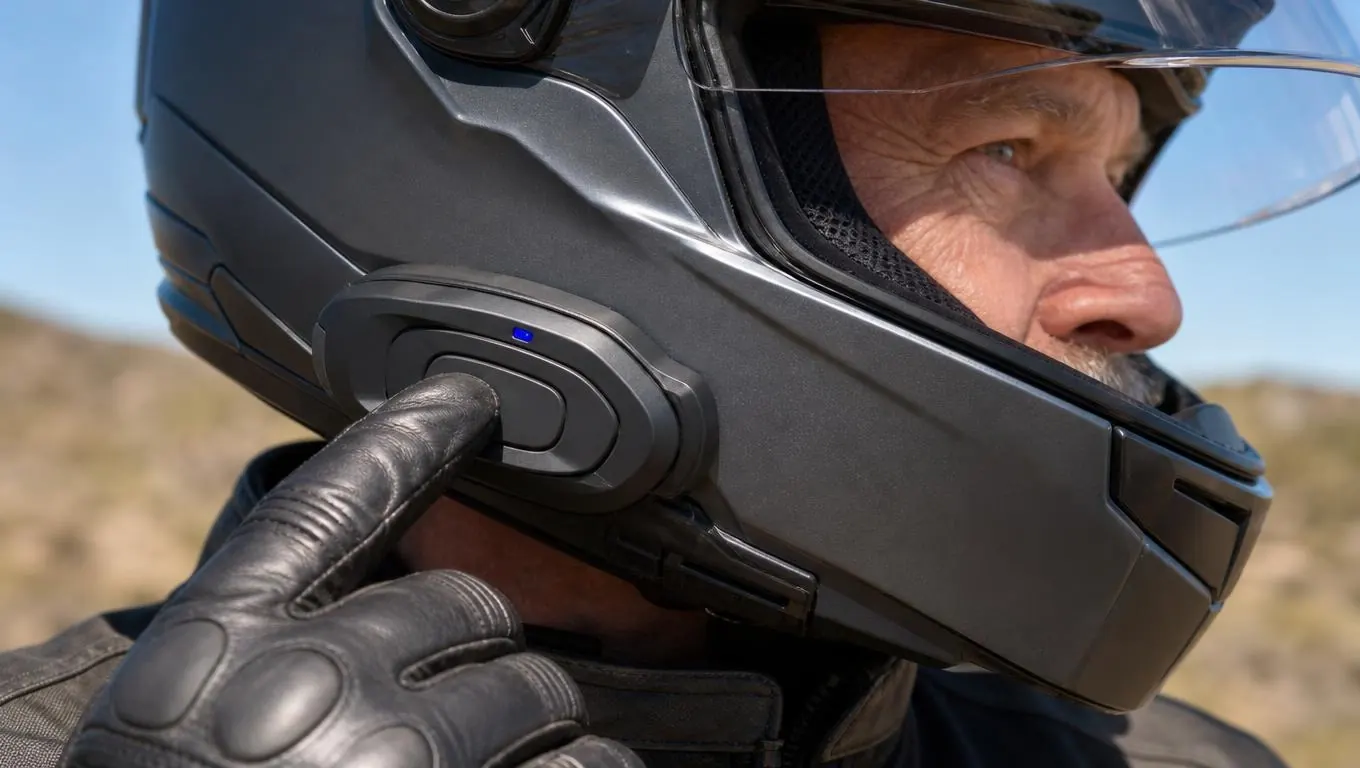
The first thing I noticed was the speakers. The Cardo Spirit uses thin 32mm speakers that sit flat inside the helmet pockets, and they sound clear at speed. With my old budget unit, I was constantly pushing the volume up, and by the end of a long day my ears felt tired. With the Spirit, I set the volume once and left it. Music stays intelligible at 70 mph, and when Ray calls me from his bike, I can actually hear him without asking him to repeat himself.
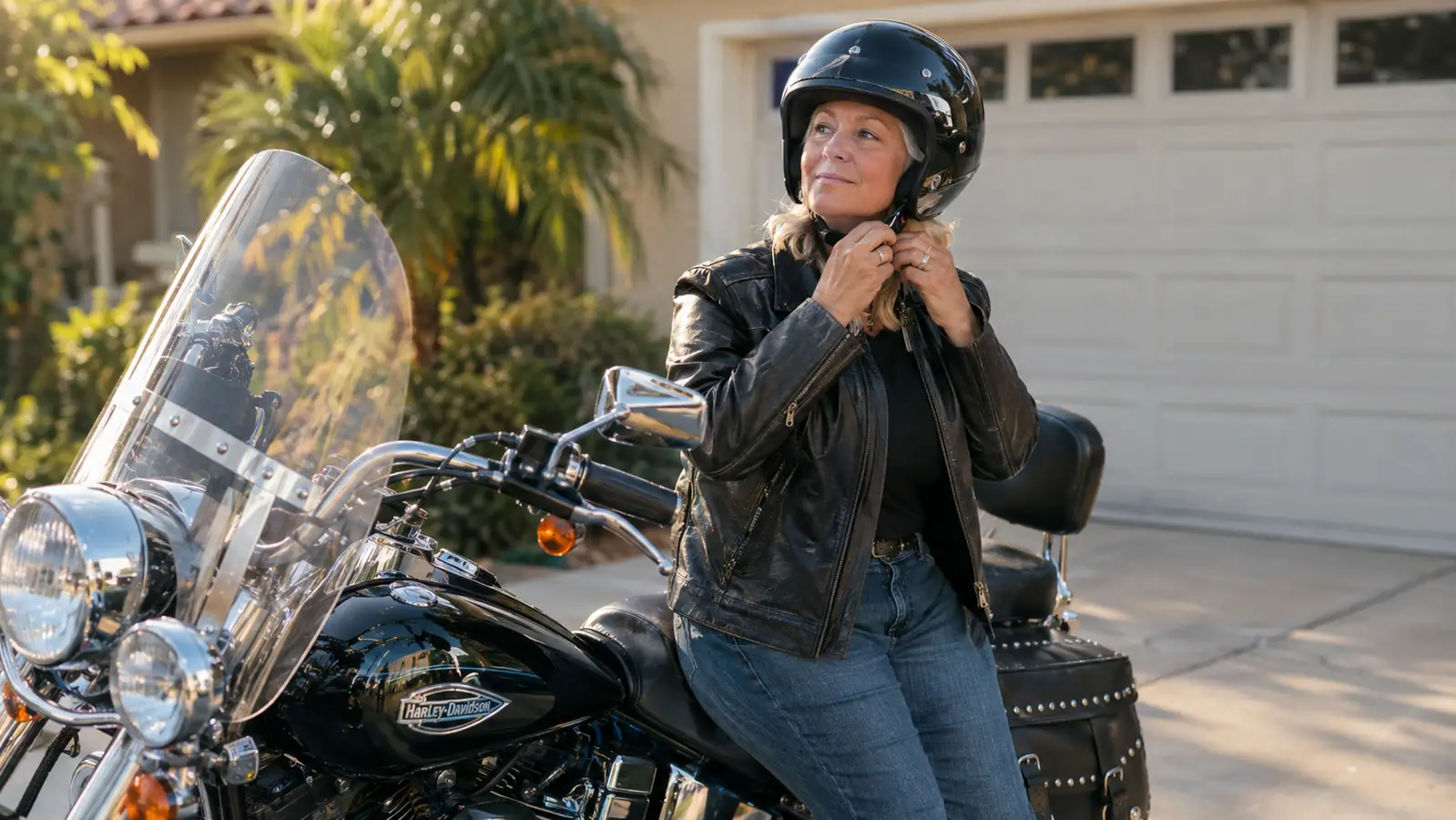
This matters more for half-helmet riders than people realize. A half helmet has very little room around the ears, and a thick speaker pushes into the side of your head. On the budget headsets I tested, the speakers were noticeably bulkier, and after about two hours I had a sore spot above my left ear that stayed with me until I got home. The Cardo Spirit speakers are thin enough that I forget they are there, and that is what made me reach for it every weekend. Sound quality matters, but comfort is what decides whether you actually wear a headset or leave it in the garage.
The other big win is reliability. The budget headsets I tested paired fine the first time, but the second or third ride was a different story. One of them dropped the connection to my phone every time I stopped for gas. Another needed a full reset before it would pair again. The Cardo Spirit just works. I press the button, it connects, and I don't think about it again until I take my helmet off. For a rider who wants to spend her ride time riding, that consistency is worth a lot.
Battery life was closer than I expected on paper, but different in practice. The budget units said they would last a full day, and when they were new they nearly did. After a couple of months of weekly charging, one of them started dying in the middle of the afternoon on longer rides. The Cardo Spirit has been steady from the first week, and I charge it the night before a ride and do not think about it. The app and the voice prompts are also clearer, which sounds minor until you are trying to figure out which beep means low battery while doing sixty on the freeway.
The dropouts were the part that wore on me. On one ride with a budget pair, Ray and I lost each other three times in about an hour, usually when he pulled more than a few bike lengths ahead or when we went around a hill. Each time we had to wait for it to reconnect, and once we had to stop at a pullout and re-pair both units by hand. With the Cardo Spirit on the same road, the intercom stayed up the whole way. It is not magic, and if you put a quarter mile and a ridge between two riders, any two-way headset will lose the link. But in normal group spacing, the Cardo simply held on better.
Where Budget Headsets Win
I'm not going to pretend the budget headsets have nothing going for them. The price is the obvious one. If you're not sure you'll use a headset more than a couple of times a year, spending a third of the price to find out is a reasonable move. I've also seen riders keep a cheap unit as a spare for a passenger helmet, which makes sense if the passenger only rides occasionally and does not need the best audio.
The obvious advantage is cost, and I am not going to wave that away. If you are newer to riding and not sure how much you will use a headset, starting with an inexpensive one is a reasonable way to find out whether you like having music and directions in your helmet at all. Some riders try a headset, find it distracting, and go back to riding in quiet. If that turns out to be you, you have not spent much to learn it. Budget units also make sense as a spare for a guest or a passenger helmet that only gets used a few times a year.
Some of the budget units are also genuinely easy to install. A few of them use a clip or a clamp instead of a glued mount, which means you can move them between helmets without much fuss. If you have two helmets and you do not want to buy two headsets, that flexibility is real. Just know that the tradeoff shows up in the sound quality and the wind noise, and that on a long day, those two things are exactly what you will notice.
Music quality on a couple of the budget units was also perfectly fine for casual listening. If all you want is some background music on a quiet country road at forty miles an hour, you will probably be happy with one. Where they fell apart for me was at highway speed, where the sound got thin and tinny and I kept reaching to turn it up. They also tended to have smaller, harder to find buttons, which is a real problem with gloves on. That is the honest picture: budget headsets are good at the easy parts of riding and weaker at the hard parts.
Hear your riding partner, not the wind
After a season of comparing them side by side, the Cardo Spirit is the one I kept on my helmet. Clear speakers, simple pairing, and it holds up in the rain.
Amazon Check Today's Price on Amazon →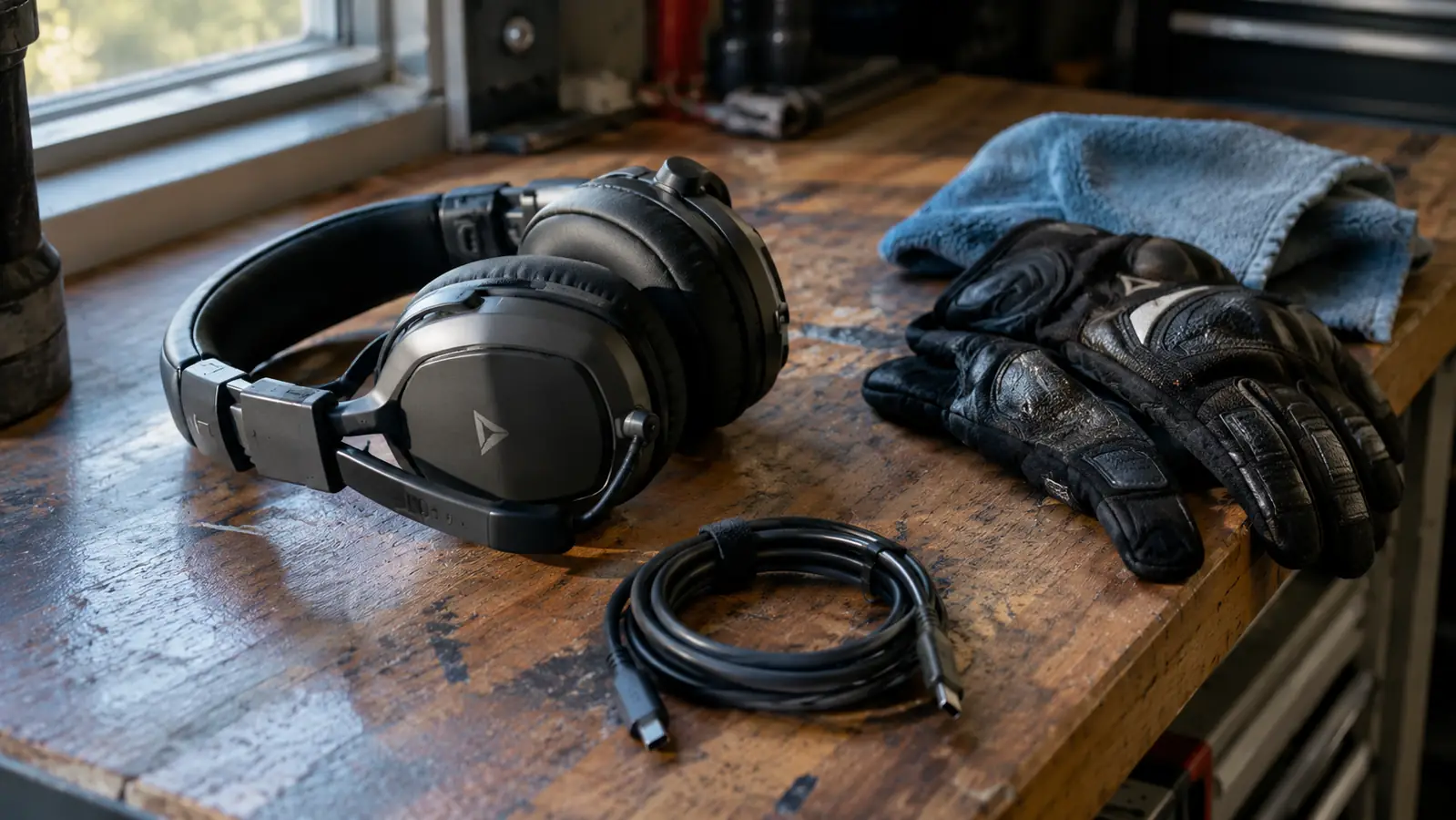
Who Should Buy Which
Buy the Cardo Spirit if you ride with a partner on a regular basis, if you take multi-day trips, or if you are the rider who gets annoyed when your gear makes you fiddle instead of ride. It is also the better choice if you ride in the rain, because the waterproofing is not a marketing line. I have been caught in a Central Valley downpour with mine, and it kept working while I was glad I had not gone with the cheaper alternative.
If you are still torn, try this simple test before you buy anything. Go for a forty-five minute ride on the highway with your current helmet and earplugs, then ask yourself how often you wished you could say something to the rider next to you. If the answer is several times, the intercom is the feature you are paying for, and reliability is what you should prioritize. If the answer is never, you mostly want music, and a cheaper unit may cover it. Knowing which rider you are saves you from buying for features you will not use, or skimping on the one feature you will use every weekend.
That describes me, and it describes most of the women in our riding club. We ride most weekends, we ride with partners or friends, and we spend a lot of time on two-lane highways at speed. For that kind of riding, the Cardo Spirit is the one that fits the way I actually ride. The thin speakers mean I can wear it under my half helmet all day, the intercom stays connected, and the controls are easy enough to find with riding gloves on. If that sounds like your weekends, it is the one I would point you to without hesitation.
Buy a budget headset if you mostly ride solo, if you only want music and the occasional phone call, or if you genuinely cannot stretch the budget right now. A cheap unit will get you started, and you can always upgrade later. Just go into it knowing that the wind noise will be worse, the battery will be less predictable, and the support may not be there when you need it. For me, the Cardo Spirit is the one that stays on my helmet.
One last thought on the two-way question, because it trips people up. The Cardo Spirit connects two riders, which is perfect for me and Ray. If your group is four or five bikes and everyone wants to be on one channel, a two-way unit is not the right tool, budget or not, and you should be looking at a mesh-style system instead. Most riders I know ride as a pair most of the time, though, and for a pair, the Cardo Spirit is the comfortable, dependable choice I keep coming back to.
Whichever you pick, a few habits will make it better. Set up your music and navigation before you pull out of the driveway. Keep the volume low enough to hear horns and sirens. Wear earplugs on highway days; the voice comes through clearer, not quieter. And check the rules where you ride, since some states have specific laws about headsets and earpieces on motorcycles. A headset should make the ride safer and more social, and that only works when it is helping you pay attention rather than pulling it away.
The one I kept on my helmet
The Cardo Spirit is the headset I reach for every ride now. If you ride with others, it will change how you ride together.
Amazon Check Today's Price on Amazon →