
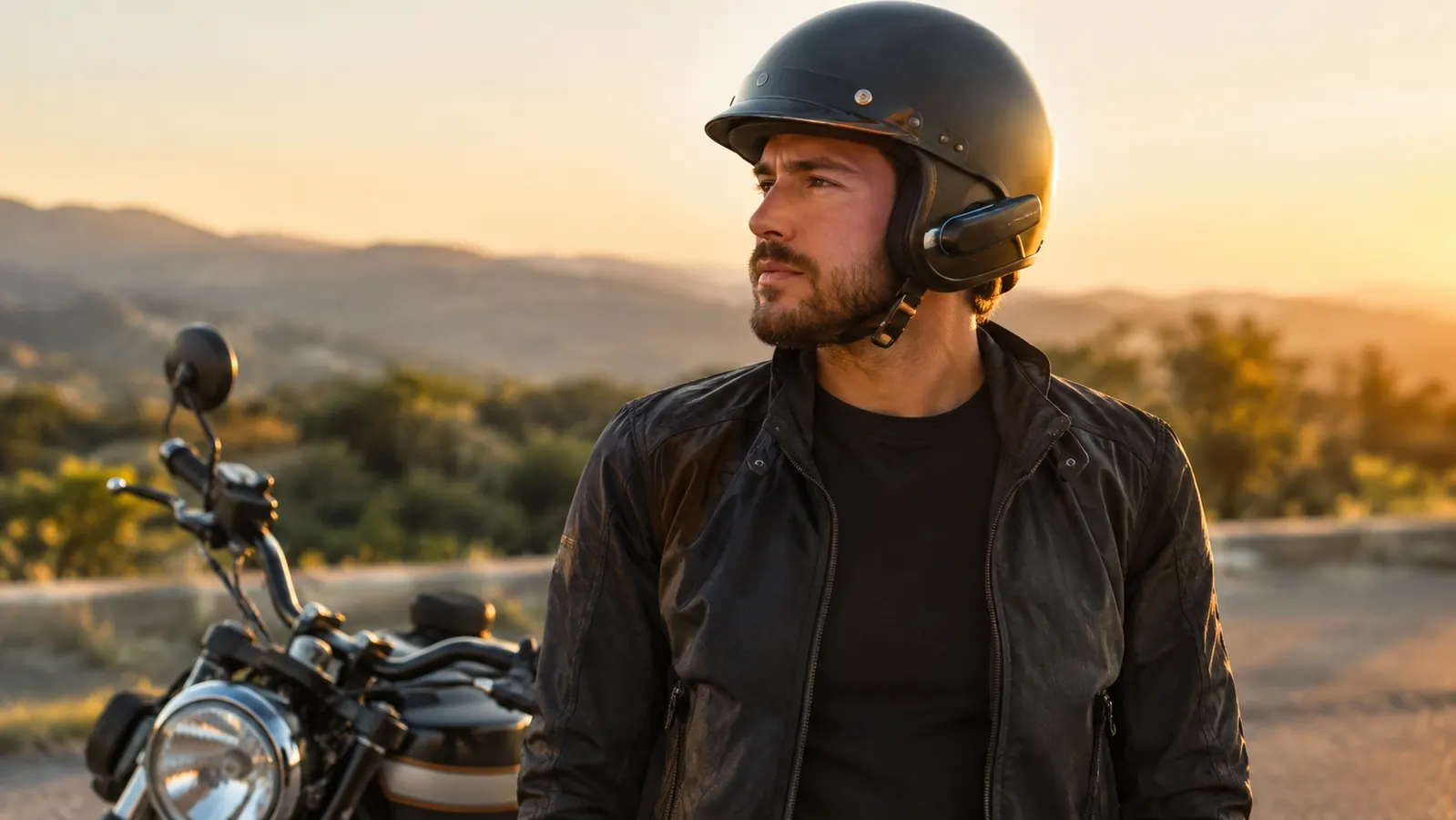
I have been riding my Heritage Softail for about 22 years now, and for most of that time I treated helmet speakers as something you tolerated. The sound was thin, the battery died at the worst moment, and the controls were impossible to use with gloves on. So when I picked up the Cardo Spirit last spring, I did not expect much. Eight months later, it is the piece of riding gear I would replace first if it broke. That surprised me, and I think it is worth explaining why.
This is the long-term version of my Cardo Spirit review. No unboxing hype, no first-ride excitement. Just what it is like to live with this headset through a Bakersfield summer, a few thousand miles of highway, and the kind of group rides where you actually need to hear the person next to you.
The Quick Verdict
The Cardo Spirit is the best value in helmet communication I have used in years. It sounds good, pairs easily, and the battery genuinely lasts all day. It is not the loudest or the most feature-packed unit on the market, but for street riders who want reliable two-way comms without spending a fortune, it is hard to beat.
Amazon Check Today's Price →Ride with music, calls, and a riding buddy without pulling over to fiddle with your phone
The Cardo Spirit is the headset I reach for every ride now. It pairs in seconds, the speakers are thin enough to fit under most helmets, and the battery has never left me stranded. If you are tired of riding in silence or shouting over wind noise, this is the one to start with.
Amazon Check Today's Price on Amazon →How I've Used It
I mounted the Cardo Spirit on my half helmet, which is what I wear for most of my riding around Bakersfield. The clamp took about five minutes to install, and I did not need any tools beyond what came in the box. The speakers are thin, which mattered to me because my helmet does not have much spare room around the ears. They sit flat against the padding and I can still get the helmet on and off without catching them.
My husband Ray has the same unit on his helmet, so we have used the two-way intercom on nearly every ride we have done together. That includes a long weekend trip up the coast, a few all-day loops in the Sierra foothills, and countless shorter rides to breakfast on Saturday mornings. I have also used it for music, for phone calls, and for hearing directions from my phone's navigation app.
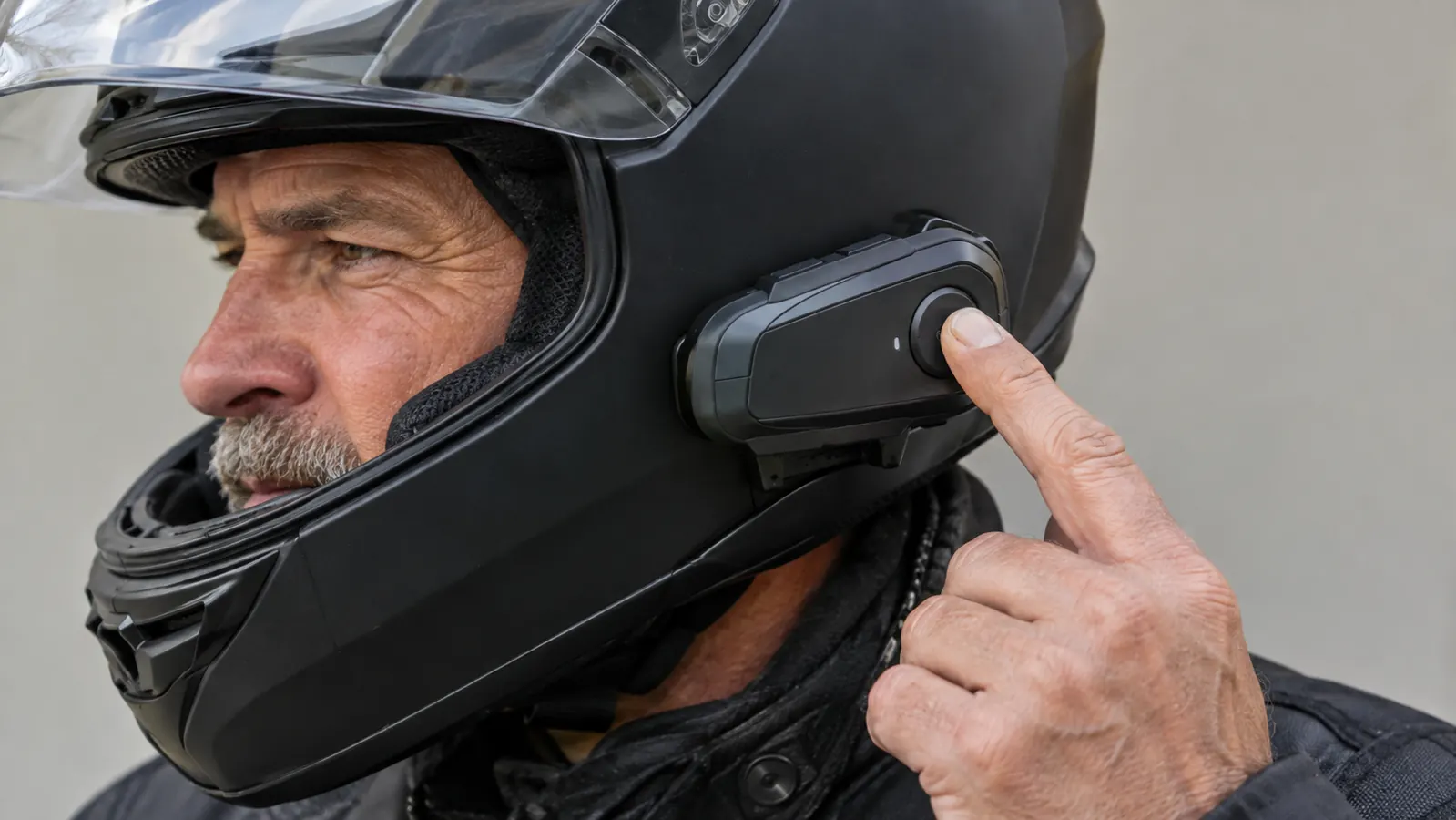
The controls took me a couple of rides to learn, but once I did, I could change volume and answer calls without taking my eyes off the road. The main button is big enough to find with a gloved thumb, which is more than I can say for some headsets I have tried.
The first ride I took with it was a short loop out toward the foothills on a Saturday morning, maybe forty miles round trip, and I spent half of it pressing the wrong button. I kept turning the volume down when I meant to skip a song. By the third ride my thumb had learned where everything was without looking, and that is the point where a headset stops being a gadget and starts being part of the bike. My advice is to sit on the couch with the unit and your gloves on for ten minutes before your first ride. Learn the volume, the music control and the intercom button by feel. You do not want to be fumbling for it at a stoplight with a pickup truck behind you.
Sound Quality and Wind Noise
The first thing I noticed was that the Cardo Spirit sounds better than I expected for a unit at this price. Music has actual bass, not just a tinny midrange. At highway speeds, I can still hear it clearly, though I do have to turn the volume up. The speakers are rated at 32mm, and they are noticeably better than the older, smaller speakers I used to ride with.
Wind noise is the real test for any helmet headset, and the Spirit handles it about as well as anything I have used. It is not magic. At 70 mph with a strong crosswind, I still hear wind, but the voice or music stays clear on top of it. The microphone does a decent job of filtering out wind when I am talking, and Ray says he can understand me even when I am on the highway.
For a sense of scale, I tested this on the same stretch of Highway 58 several times over a few months, at roughly the same speeds each time. Around town at thirty or forty miles an hour I could hear everything clearly with the volume about halfway up. On the highway at sixty-five, with my half helmet and no windscreen deflector, I had to turn it up most of the way, and phone calls got harder to follow when a big rig passed. With earplugs in, which I wear on longer highway days anyway, the voice came through better than I expected, because the plugs cut the wind roar more than they cut the speakers. That combination is what I settled on for any ride over an hour.
One thing I will say honestly: if you ride a bike with a loud exhaust and no fairing, you will want to try the volume before you commit. The Spirit gets loud, but it is not going to overpower a straight-pipe Harley at full throttle. For my bike, which is stock, it is plenty.
Battery Life and Charging
Cardo claims up to 13 hours of talk time on the Spirit, and in my experience that number is close to real. On our coast trip, I rode for about eight hours on the first day, with music and intercom running most of the way, and the battery still showed plenty of charge when I plugged it in that night. I have never had it die on a ride, and I have forgotten to charge it more than once.
Charging is via a standard USB cable, which is convenient because I can charge it from the same cable I use for my phone. It takes a couple of hours to top up, and I usually just plug it in when I get home from a ride. The battery indicator on the unit is simple, but it is enough to tell me whether I need to charge before I head out.
My routine is simple. I plug the Cardo Spirit in the night before any club ride, the same way I check my tire pressure, and I have not had it die on me mid-ride yet. On our longest trip this year, three days of riding with about five or six hours in the saddle each day, I charged it every night at the motel and never saw the low battery warning. I would not count on stretching it across two full days without a charge, though. If you ride long days back to back, bring the cable and a small wall plug in your saddlebag, because a dead headset in the middle of a group ride is the most annoying kind of silence.
Pairing and Everyday Use
Pairing the Cardo Spirit with my phone took less than a minute the first time. It remembers the phone automatically, so when I turn it on, it connects before I even get my gloves on. That sounds like a small thing, but it is the difference between using a headset every ride and leaving it in the garage.
The two-way intercom between Ray's unit and mine is simple to start. We press the same button on both units and they connect. The range is supposed to be about 400 meters, and in practice we have stayed connected on the highway even when a car or two got between us. Because it is two-way, it connects to one other rider at a time, which for me is always Ray, even when we ride with the whole club.
The thing that changed for us was how we ride together. Before the Cardo Spirit, Ray would point at a gas station and I would guess what he meant. Now he just says he needs fuel at the next exit, and I can tell him I want to stop for a cold drink or that my back needs a stretch. On one ride last spring I noticed a loose strap flapping on his saddlebag and told him about it before it caught in anything. That one exchange made the headset worth having for me. It is not about chatting the whole ride. It is about being able to say the one thing that matters at the moment it matters.
I will note that the Spirit is a two-way intercom, not a multi-rider system. If you regularly ride with three or more people who all want to be on the same channel, you will want a unit with more channels. For me and Ray, two-way is exactly what we need.

Comfort, Fit, and Build Quality
The Cardo Spirit is a small unit, and once it is mounted, I barely notice it. The clamp is secure, and I have never had it shift or loosen, even on rough roads. The buttons are easy to find with gloves on, and the whole thing feels solid enough to survive being left on a helmet in a hot garage all summer.
The speakers are the thinnest I have used, which is the main reason I can wear the headset with my half helmet. If you have a full-face helmet with speaker pockets, they will fit even more easily. I have also worn it under a full-face helmet on cooler days, and it worked just as well.
The unit is waterproof, which I have tested more than I would like. I got caught in a rainstorm on the way home from a ride, and the Spirit kept working the whole time. The charging port is covered, and I have not had any issues with moisture getting in.
Build quality has held up better than I expected for something that lives on the outside of a helmet. The clamp mount has not loosened, the buttons still click cleanly, and the little rubber flap over the charging port still seals. I take the helmet on and off at every stop, set it on the seat, sometimes knock it against the tank, and the unit has a couple of scuffs but nothing more. The one habit I would recommend is tucking the speaker wire neatly under the helmet liner when you install it. A loose loop of wire is the thing most likely to snag when you pull the helmet off in a hurry.
What I Liked
- Thin 32mm speakers fit comfortably under most helmets, including half helmets
- Battery life is genuinely all-day, with no surprise drains
- Simple pairing with your phone and easy two-way intercom with another rider
- Waterproof build that handles rain without complaint
- Big, glove-friendly buttons that are easy to find while riding
- Strong value for the price
Where It Falls Short
- Two-way intercom only, so larger groups need a different unit
- Not the loudest headset on the market, especially at high speed with a loud exhaust
- No voice assistant controls, which some riders will miss
- The charging port cover is a little fiddly to close
The battery has never died on me, the speakers fit under my half helmet, and I can actually hear Ray when we are doing 70 on the highway. That is the whole job, and the Cardo Spirit does it.
Who This Is For
The Cardo Spirit is for the rider who wants reliable communication and music without turning it into a project. If you ride with a partner or a friend, want to hear directions from your phone, or just want music in your helmet without earbuds, this is the headset to get. It is also a great choice for riders who are new to helmet communication and do not want to spend a lot to find out whether they will use it.
It is especially good for half-helmet riders, because the thin speakers fit where bulkier units do not. If your whole group wants to talk together, a two-way unit like the Spirit is not built for that.
Who Should Skip It
If you regularly ride with three or more people who all need to be on the same intercom channel, the Spirit is not the right tool. You will want a unit with multi-rider support. The same goes for riders who need the absolute loudest headset on the market, or who want voice assistant controls built in. And if you ride a bike with a very loud exhaust and no fairing, you may find yourself wishing for more volume.
None of those are dealbreakers for me. For the way I ride, the Cardo Spirit has been the right balance of price, comfort, and reliability. It is the headset I would buy again, and the one I recommend to friends who ask what to get.
Stop shouting over the wind and start enjoying the ride
The Cardo Spirit has made every ride better for me, from quick trips to the store to long weekends with Ray. If you want clear music, easy calls, and reliable two-way comms without spending a fortune, this is the one. See what it costs today on Amazon.
Amazon Check Today's Price on Amazon →