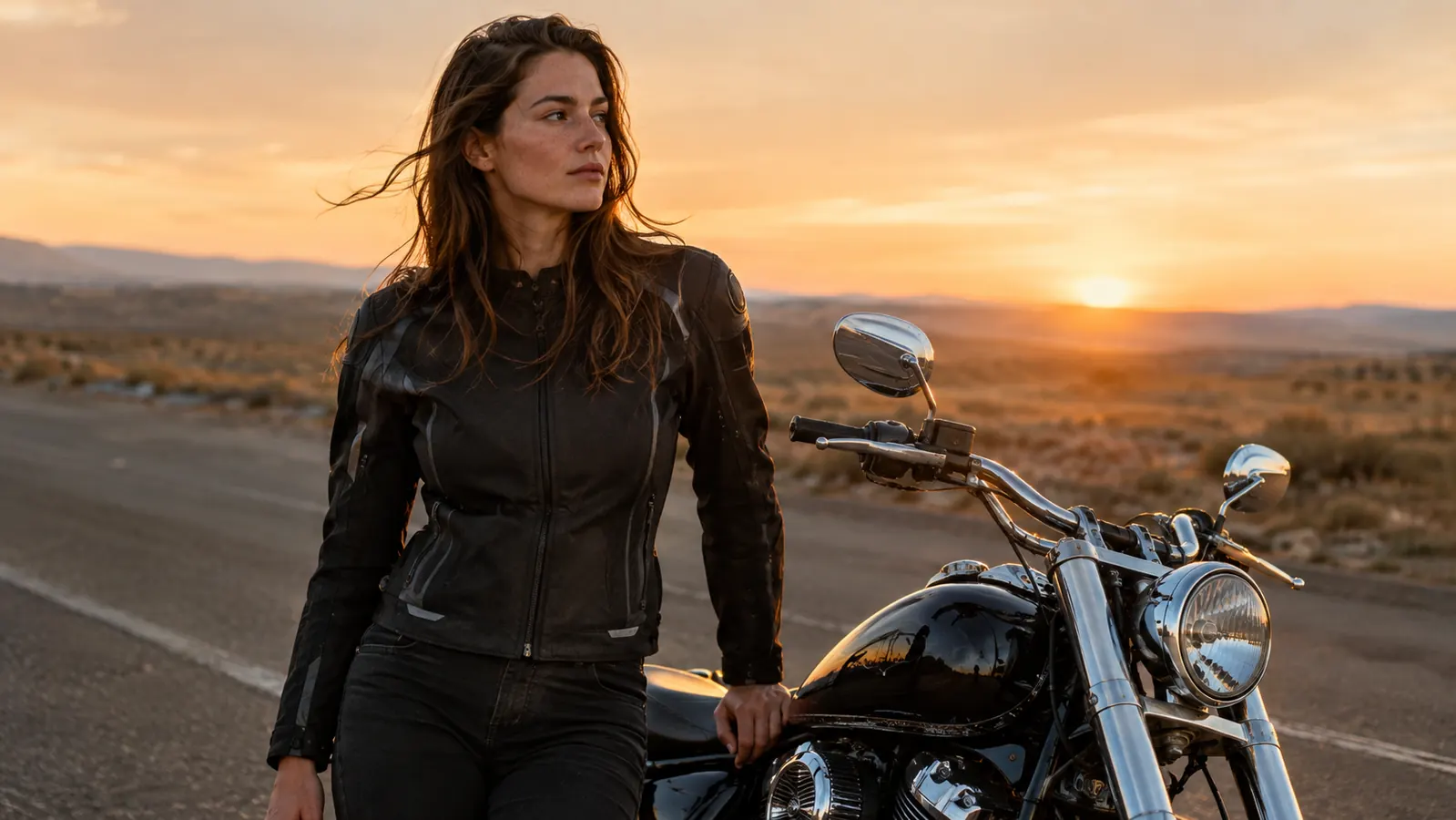
I have been riding for about 22 years, and I have owned leather jackets, mesh jackets, and a couple of textile jackets that fell apart faster than a cheap tent. So when I started seeing the HWK Motorsports Apparel women's riding jacket everywhere, I was curious but skeptical. A jacket that costs a fraction of what the big brands charge usually means you give up something important, like real armor or zippers that survive a second season. I wore this one through a Bakersfield summer, a long weekend in the Sierra, and a stretch of commuter miles in between. Here is the honest version, including the parts I would not put in a sponsored post.
The short version: the HWK Motorsports Apparel jacket is a lot of jacket for the money, and it is also a jacket with real compromises. The armor is better than I expected, the ventilation is genuinely good, and the fit is workable for a curvy rider if you pay attention to sizing. But the wrist closures are fiddly, the collar sits higher than some women like, and the fabric is not as tough as a heavy leather hide no matter how the marketing words it. You need to know all of that before you click buy.
The Quick Verdict
A well-ventilated, well-armored textile jacket that delivers far more than its price suggests, as long as you size carefully and accept that it is not a leather replacement.
Amazon Check Today's Price →The honest bottom line before you keep reading
If you want a summer-friendly armored jacket that does not empty your wallet, this is the one I would start with. Check today's price on Amazon and see if your size is in stock.
Amazon Check Today's Price on Amazon →How I Tested It and What I Actually Did
I am not a professional gear tester. I am a 59-year-old retired dental hygienist who rides a Harley-Davidson Heritage Softail, mostly on weekend group rides with my local riding club and one or two longer trips a year. My husband Ray rides his own bike, and we both log a lot of Central Valley miles, which means heat is the enemy from May through September. I wore the HWK jacket on a 90-degree day through the Kern River canyon, on an overnight trip to the coast where the fog rolled in and the temperature dropped 25 degrees, and on a string of 30-minute commuter rides to the grocery store and the post office. I did not crash in it, and I want to be straight about that. I can tell you how the armor feels and how the jacket moves, but I cannot tell you how it performs in a slide, because I did not put that to the test.
What I can tell you is how it fits over a real woman's body, how the zippers hold up after weeks of use, how hot it gets when the pavement is radiating heat, and how easy it is to live with when you are just trying to get somewhere. That is the stuff the product photos never show you.
My test was not complicated. I wore the HWK Motorsports Apparel jacket on our club's weekend rides, on solo errands around town, and on one longer trip up the coast where we had cold fog in the morning and warm sun by early afternoon. I paid attention to how it felt in the first ten minutes and in the sixth hour, because a jacket that feels fine in the parking lot can feel very different after a long day in the saddle. I also tried it on and off at every stop, because a jacket that is a hassle to put back on is a jacket you will be tempted to leave on the bike.
The Fit: What Nobody Tells You About Sizing
The single most important thing to know about the HWK Motorsports Apparel women's jacket is that the sizing runs small in the bust and hips and a little long in the sleeves. I am 5-foot-6, about 150 pounds, with a 36C chest, and the medium fits me through the shoulders but is snug across the bust with a base layer underneath. If you plan to wear a hoodie or a thick fleece under it, size up. If you are between sizes, size up. I have heard the same from two women in my riding club who bought the same jacket, and both of them wished they had gone one size larger.
My practical sizing advice is to measure yourself before you order rather than going by the size you wear in a regular jacket. Measure around the fullest part of your chest and your hips, compare those numbers to the size chart on the listing, and if you land between sizes, think about what you will wear underneath. In summer I ride with a thin wicking shirt, but in winter I want room for a fleece. I went with the size that fit my winter layers, then used the waist and arm adjusters to snug it down in summer. That approach has worked well for me all year.
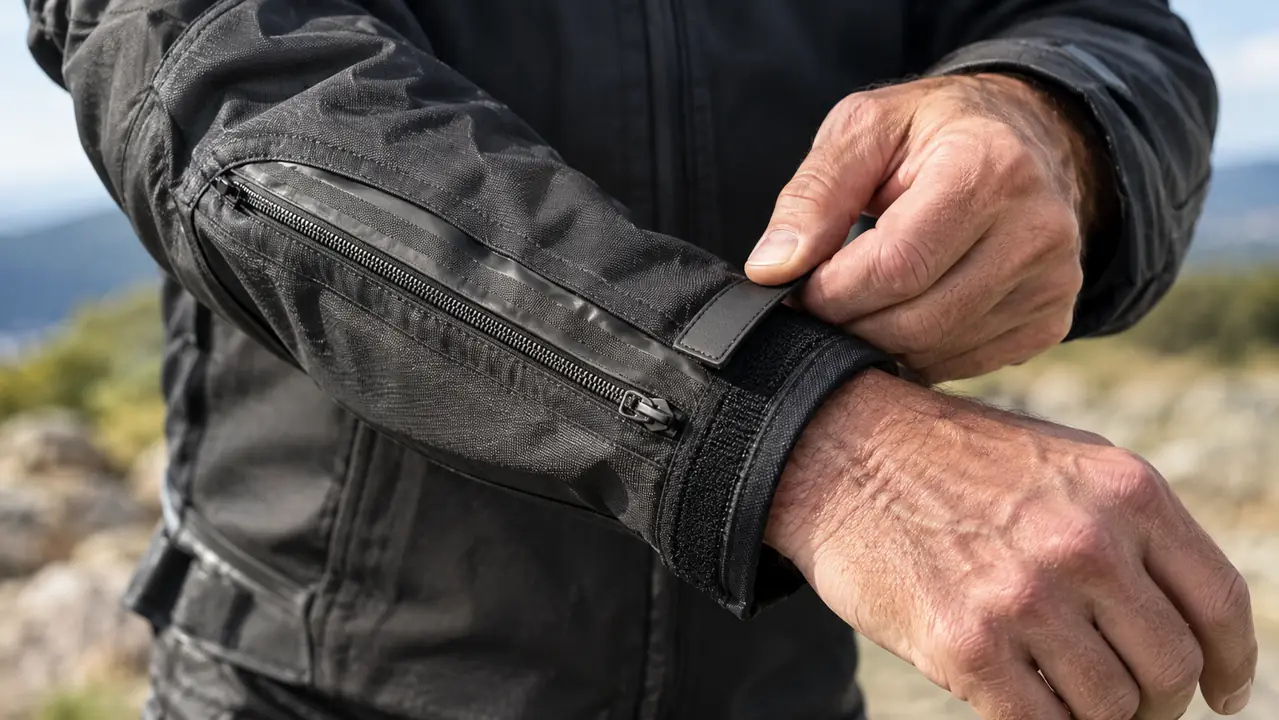
The sleeves are cut for a slightly longer arm than mine, which is actually fine on a motorcycle because you are reaching for the bars. But if you have short arms like I do, the wrist closures become important, and that is where the jacket gets fiddly. The cuffs have a zipper and a snap strap, and you have to line them up just right or the zipper catches on the fabric. It is not a dealbreaker, but it is the kind of thing you discover at 6:30 in the morning when you are trying to get out the door.
The collar is another fit surprise. It sits higher than most of the jackets I have owned, which is great for wind protection but took me a full week to get used to. If you have a shorter neck or you do not like anything touching your throat, this might bother you more than it bothered me.
Armor: The Part That Actually Matters
Here is what surprised me most: the armor in this jacket is real. You get removable armor in the shoulders and elbows, and a basic back pad that you can swap for a better back protector. I took the armor out to check it, and it is a firm, dense foam that stays in place inside the pockets. It does not shift around when you move, which is something I have seen in jackets that cost twice as much.
The honest caveat is that the armor is not the thickest or most protective you can buy. It is entry-level armor, the kind that protects against impact but is not going to win any awards in a high-speed crash. For everyday street riding, weekend canyon runs, and touring on highways, it is absolutely adequate. If you are planning to track your bike or ride aggressively off-road, you will want to upgrade the armor or buy a different jacket altogether.
The back pad is basic, and I will be honest: I wish I had upgraded it to a proper back protector sooner. If you buy this jacket, consider budgeting for an upgraded back protector too. It is the difference between having armor at the points of impact and having protection along your whole spine.
The armor is real, it stays where it is supposed to, and it is the reason I would recommend this jacket to a new rider on a budget.
Ventilation and Heat: The Bakersfield Test
I live in Bakersfield, where summer temperatures sit above 100 degrees for weeks at a time. I have owned mesh jackets that felt like wearing a fishnet, and I have owned leather jackets that turned into a sauna the moment the sun came up. The HWK jacket sits somewhere in between, and for most riders that is exactly the right place.
The jacket has zippered vents on the chest and arms, and they actually move air. On a 90-degree day at highway speed, I could feel the breeze through the vents, which is more than I can say for some jackets I have paid triple the price for. In stop-and-go traffic, it gets warm, but it does not get unbearable. The 600D Cordura fabric breathes better than leather and better than the cheap vinyl jackets you see at big-box stores.
One habit makes the venting work much better: open the vents before you get hot, not after. If I wait until I am already sweating at a red light, it takes a long time for the jacket to catch up. When I know the afternoon is going to be warm, I open everything at the gas station before we head out, and I stay comfortable far longer. I also wear a moisture-wicking shirt underneath instead of cotton. Cotton soaks up sweat and holds it against your skin, while a wicking layer lets the moving air through the vents do its job.
The tradeoff is that this is an all-season jacket, which means it is not great in any one season. In the winter, you will want the thermal liner in and a good base layer, because the jacket alone is not enough below about 50 degrees. In the summer, it is more comfortable than leather but not as cool as a dedicated mesh jacket. If you ride in a place with mild weather year-round, this is a great one-jacket solution. If you ride in extreme heat or extreme cold, you will want a second jacket for those extremes.
What Nobody Tells You About the Fabric and Build Quality
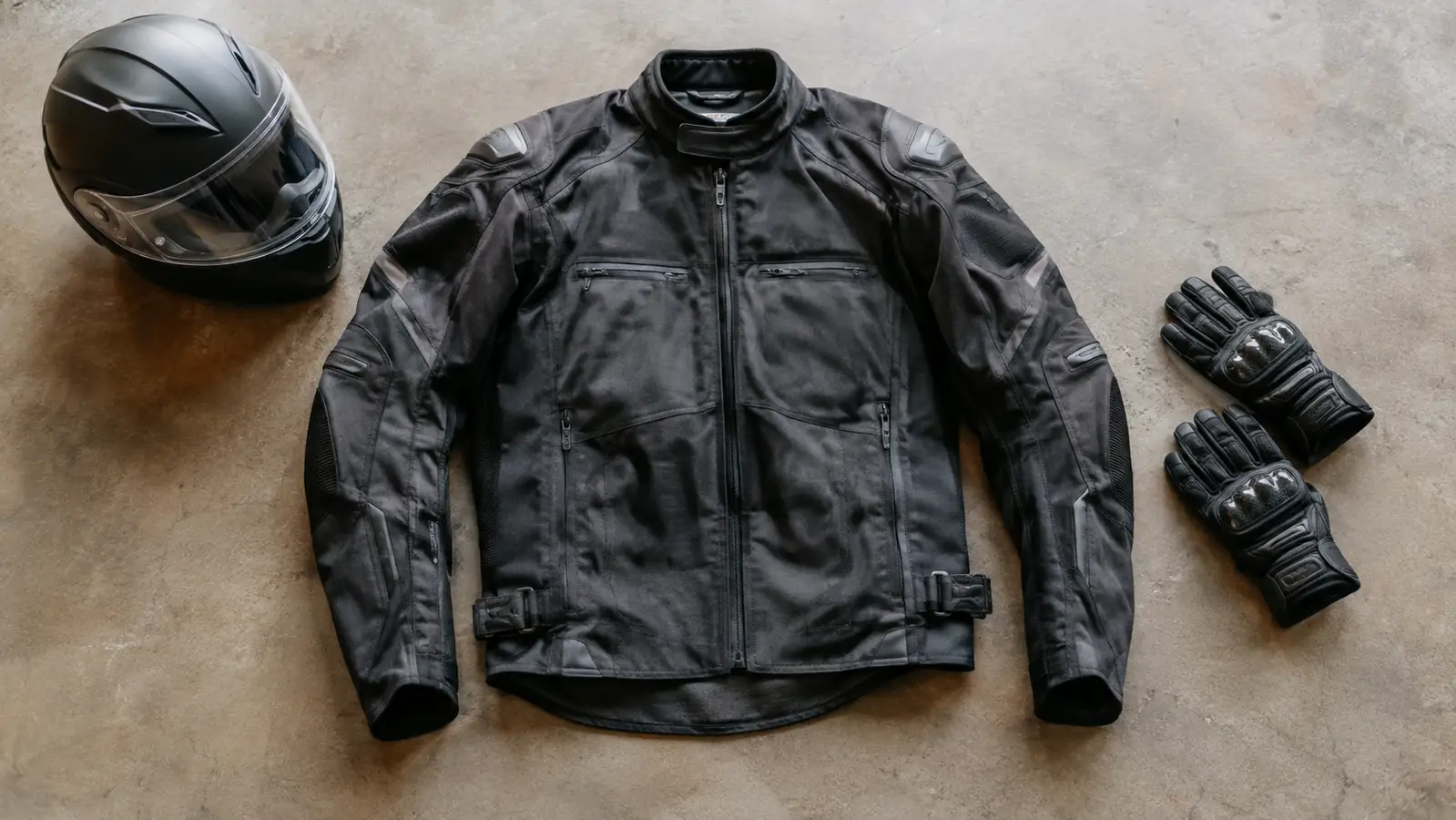
The 600D Cordura fabric is the real selling point of this jacket, and it is genuinely tough for the price. It has a tight weave that feels substantial in your hand, and it has held up well through a summer of use. The stitching is clean, the zippers are YKK-style and have not failed, and the seams have not pulled anywhere. For a jacket in this price range, that is impressive.
But here is what nobody tells you: 600D Cordura is not leather, and it is not going to protect you the way a heavy leather hide will in a slide. Textile jackets are abrasion-resistant, not abrasion-proof. If you are a new rider, you should understand that this jacket is a solid layer of protection, not a suit of armor. It is better than riding in a hoodie, which is what a lot of people do, but it is not the same as a heavy premium leather jacket.
The other thing nobody tells you is that the jacket is not waterproof, despite what some listings imply. It is water-resistant, which means it will handle a light sprinkle or a brief shower, but a real downpour will soak through. I got caught in a 20-minute rain on the way to the coast, and by the time I stopped, my shoulders were damp. If you ride in the rain often, buy a rain shell to wear over it.
What I Liked
- Removable armor at the shoulders, elbows and back
- Chest, arm and back vents that genuinely move air in valley heat
- Women's cut with room through the chest and hips
- Adjusters at the waist and arms keep the armor in place
- Tough 600D Cordura shell that cleans up with a damp cloth
Where It Falls Short
- Not waterproof, so you need a rain layer in a real storm
- Runs warm when you are stopped in direct sun
- Sleeves run a little long for shorter arms
- The included back pad is basic
For rain, my solution is cheap and simple. I keep a light rain jacket rolled up in my saddlebag, and when the sky turns, I pull over and put it on over the HWK jacket. It fits over the armor without any trouble, keeps the worst of the water out, and comes off again as soon as the road dries. Riders who live somewhere with a lot of rain might prefer a jacket with a built-in waterproof liner, but for the occasional shower out here, the rain shell is all I have needed. It also doubles as a windbreaker on a cold morning.
The Little Things That Annoy Me
No honest review is complete without the annoyances, so here they are. The wrist closures are the biggest one, and I have already mentioned them. The collar takes getting used to. The pockets are deep enough for a phone and a wallet, but they are not waterproof, so keep your phone in a ziplock if there is any chance of rain.
The jacket also runs a little warm in the arms when you are not moving, which is fine on a ride but annoying when you stop for gas and the sun is beating down. And the reflective piping is subtle, which is good for style but not great for visibility. If you ride at night a lot, add a reflective vest.
Who This Is For
This jacket is for the rider who wants one jacket that does a little bit of everything without costing a fortune. It is for the woman who is new to riding and does not want to spend a lot on a leather jacket before she knows what she likes. It is for the weekend rider who wants real armor, decent ventilation, and a jacket that looks good at the rally and in the diner parking lot. It is for the rider who lives in a place with four distinct seasons and wants something that works from spring through fall with a liner underneath.
Who Should Skip It
Skip this jacket if you ride in heavy rain regularly, because you will need a separate rain shell. Skip it if you want maximum abrasion protection, because a good leather jacket is still the gold standard. Skip it if you are between sizes and do not want to deal with returns, because the fit is the most common complaint I have seen. And skip it if you want a jacket that is truly cool in 100-degree heat, because a dedicated mesh jacket will serve you better.
Still weighing it? Here is my honest advice
If the fit sounds workable and you want real armor without the leather price tag, the HWK Motorsports Apparel jacket is worth a try. Check today's price on Amazon and read the recent reviews from women your size before you order.
Amazon Check Today's Price on Amazon →