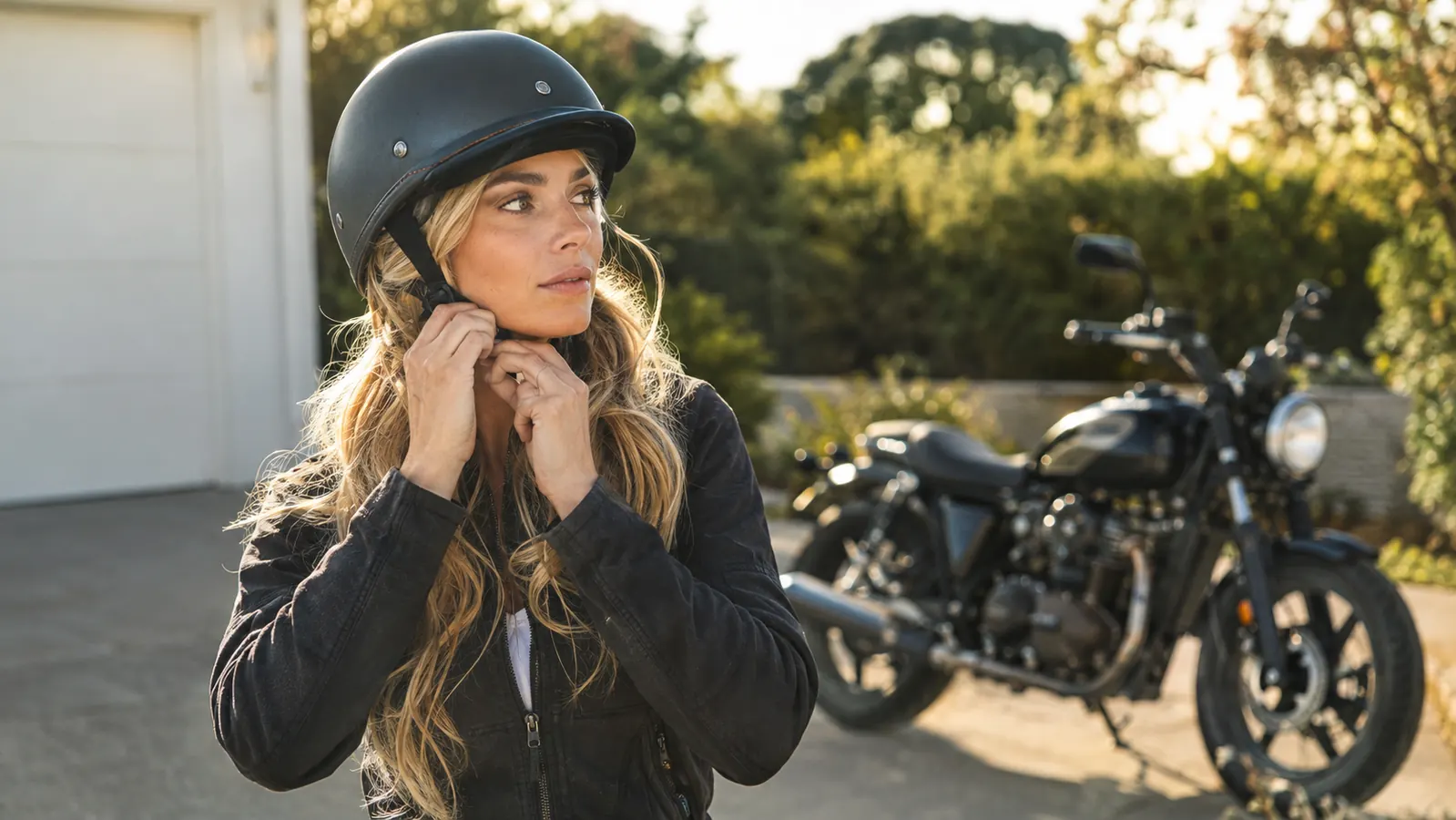
If you ride a cruiser or a touring bike, you have probably stood in front of a rack of half helmets and wondered which one would actually stay put on the highway. I have been riding for about 22 years, mostly on my Harley-Davidson Heritage Softail, and I have gone through more helmets than I care to count. The VCOROS F07 is the one I keep reaching for on warm Central Valley days, and this guide is about how to choose a DOT half helmet that fits, using the VCOROS F07 as the example.
A half helmet has to do three things at once: protect your head in a crash, stay comfortable on a long ride, and not feel like it is squeezing your temples after an hour. Most people pick based on looks or price, then discover the helmet shifts when they turn their head. That is exactly the problem I want to help you avoid.
Start with a DOT half helmet that fits the first time
The VCOROS F07 is the helmet I use for most of my street and touring miles. It is DOT approved, comes in a range of sizes, and the fit is consistent enough that you can order with confidence if you measure carefully.
Amazon Check Today's Price on Amazon →Step 1: Measure your head the right way
Before you look at any helmet, you need a soft measuring tape. Wrap it around your head about an inch above your eyebrows, at the widest point. Keep the tape level, not tilted, and pull it snug without digging in. Write down the number in centimeters, because most helmet size charts use centimeters.
For the VCOROS F07, the size chart is straightforward. A measurement around 55 to 56 cm puts you in a small, 57 to 58 cm is a medium, 59 to 60 cm is a large, and 61 to 62 cm is an XL. If you land right on the edge of two sizes, go with the larger one. A slightly roomy helmet can be snugged up with the padding, but a too-small helmet will never stretch out enough to be comfortable.
Measure twice. I know that sounds like advice for carpentry, but I have seen riders order a size down because they measured over thick hair or measured at an angle. The result is a helmet that feels fine in the store and painful after 45 minutes on the road. I learned this the hard way with an old helmet I bought years ago. Years ago, with a different helmet, I measured in a hurry, grabbed the wrong size, and by the time I hit the Grapevine on a Saturday morning the pressure across my forehead was bad enough that I pulled over at the first rest stop and loosened the strap, which only made the helmet wobble. I rode the rest of that day with a headache and a helmet that never sat right. That one mistake cost me a full riding day, and it is the reason I tell everyone to measure twice and take their time.
Step 2: Check the shape of your head, not just the size
Two riders can have the same head circumference and need different helmets. Head shape matters. Some helmets are rounder inside, some are more oval. The VCOROS F07 has a fairly neutral interior shape, which is one reason it works for a lot of riders, but you still need to try it on or order from a place with a good return policy.
When you put the helmet on, it should touch your head evenly. You should not feel a pressure point at the forehead, the temples, or the back of the skull. If you feel a hot spot, that helmet is the wrong shape for you, no matter what the size chart says. I have a slightly round head, and the VCOROS F07 fits me without any pinching. My husband Ray has a more oval head, and he wears the same model in a different size. That tells me the interior shape is forgiving enough to work for a range of riders, but it is not a guarantee for you. Your head is the final judge.
Here is a trick I use when I am checking shape. Put the helmet on and press gently on the top of the shell with both palms. You should feel even pressure all the way around your head, not a hard spot on one side. Then wear it around the house for twenty minutes while you do something ordinary, like making coffee or sorting mail. A helmet that feels fine for two minutes in a store will announce its problems by minute fifteen. I did exactly that with the VCOROS F07 on a Tuesday afternoon before I ever took it on the road, and it was the first half helmet I owned that I forgot I was wearing.
Step 3: Do the shake test before you ride
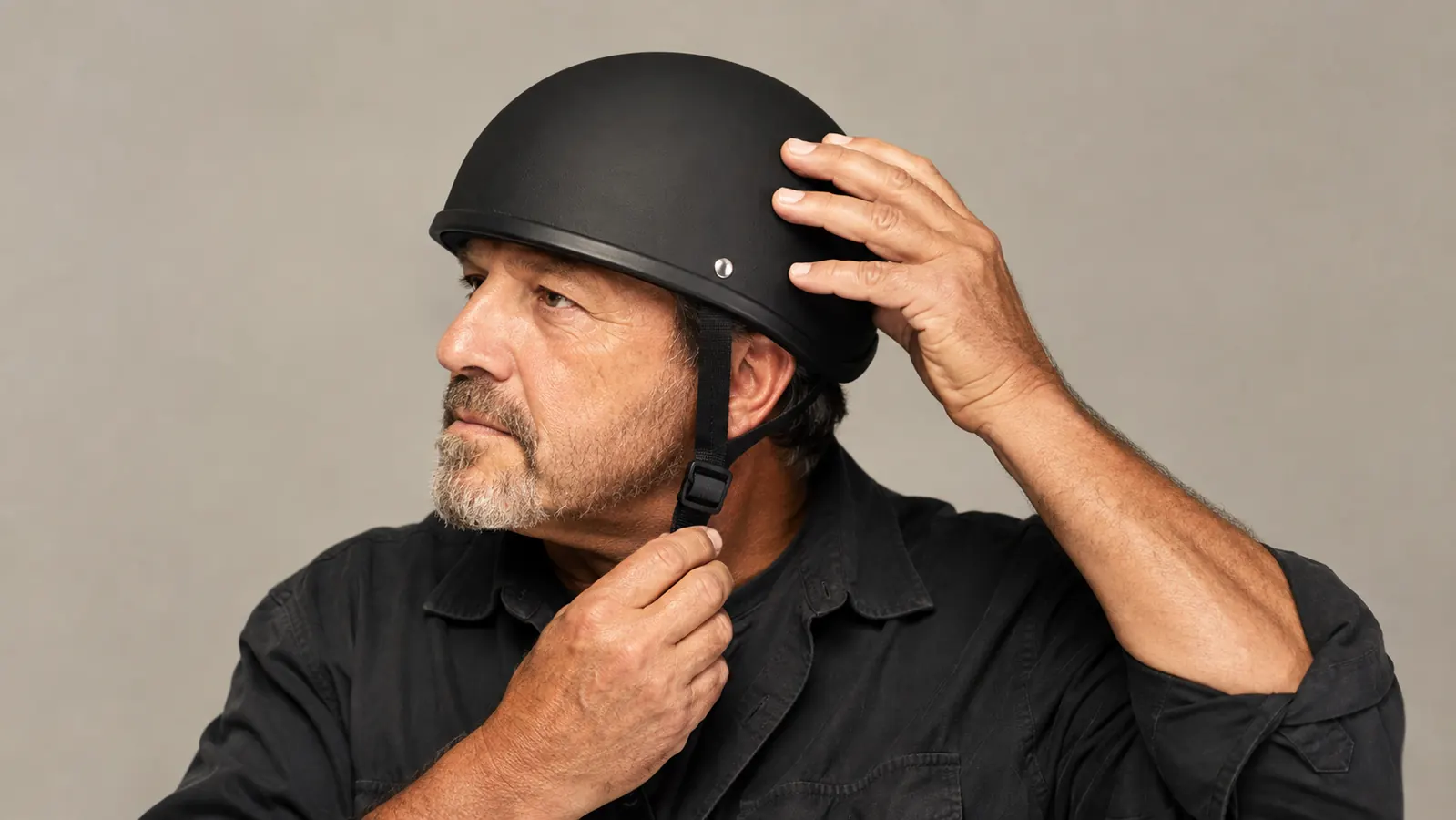
Once the helmet is on and strapped, grab the back of it and try to move it. A properly fitted half helmet should not slide around on your head. Then shake your head side to side, like you are saying no firmly. The helmet should move with your head, not lag behind it.
The VCOROS F07 passes this test for me. The padding is firm enough to hold the helmet in place, and the chin strap keeps it secure. If the helmet shifts when you shake your head, it is too big. If it leaves a red mark on your forehead after a few minutes, it is too small. I also do a quick forward lean test, the kind of motion you make when you reach for the tank bag or check your mirrors at a stop. A helmet that rolls forward when you tip your head down is going to be a problem on a long day, because you will be fighting it every time you glance at your instruments.
This test matters more for half helmets than for full-face helmets, because a half helmet has less shell to anchor it. A loose half helmet is not just uncomfortable, it is dangerous. It can rotate on your head in a crash, and it can block your vision if it slides down over your eyes. I have seen riders at our Saturday breakfast rides wearing helmets that visibly moved when they turned to talk, and I always want to say something. A helmet that shifts is a helmet that is not doing its job.
Step 4: Look for the DOT sticker and understand what it means
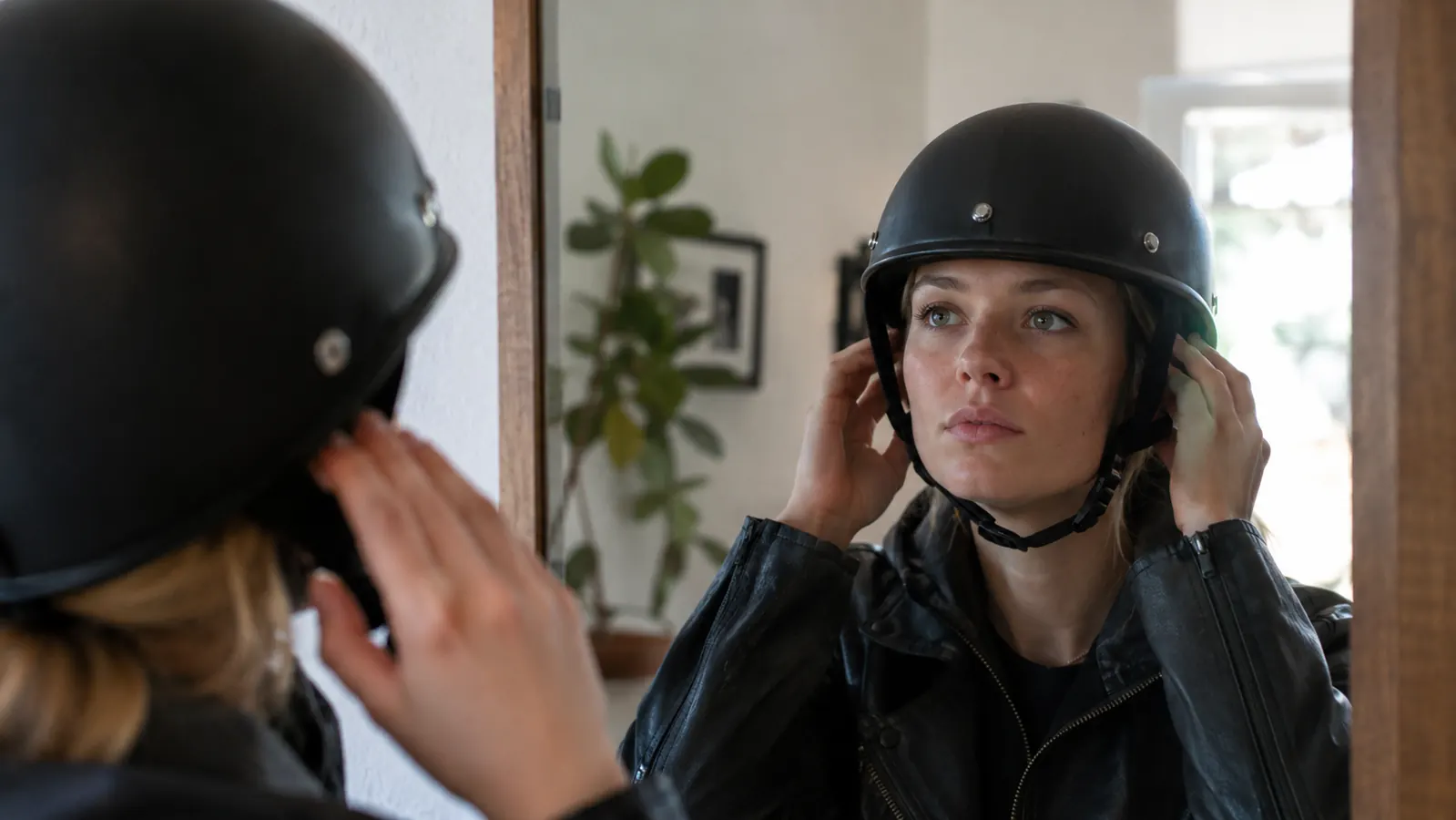
A DOT approved helmet meets the U.S. Department of Transportation standard, which is the minimum legal requirement for street riding in most states. The VCOROS F07 carries a DOT sticker on the back of the shell. That sticker is not just a marketing detail, it is a legal certification.
DOT certification means the helmet has been tested for impact absorption, penetration resistance, and strap strength. It does not mean the helmet is the safest thing you can buy, and it does not mean a full-face helmet is not safer. It means this helmet meets the federal standard for street use. I am honest about this with everyone who asks: a half helmet leaves your face exposed, and a full-face helmet offers more protection. But if you are going to wear a half helmet, wear one that is DOT certified. The VCOROS F07 is, and that is the baseline I look for in any helmet I recommend.
One thing I check on any helmet, including the VCOROS F07, is that the DOT sticker is actually on the shell and not just printed on a hang tag. The sticker should be permanently attached, and the letters should be clear. I also look for the manufacturer's labeling inside the liner with the size and the standard it meets. It takes thirty seconds to check, and it is the difference between buying a real certified helmet and buying something that only looks like one. I have seen novelty helmets at swap meets that had no sticker at all, and no amount of style is worth that trade.
Step 5: Break it in and adjust the straps
A new helmet should feel snug, not painful. The VCOROS F07 has a break-in period of a few rides. The padding compresses slightly and molds to your head. If it feels tight in the first ten minutes, give it a few short rides before you decide it is the wrong size. I remember the first ride I took with mine, a short loop through the orchards east of Bakersfield on a Sunday afternoon. It was snug enough that I noticed it for the first half hour, and by the time I got home I had stopped thinking about it entirely. That is the break-in working the way it should.
Adjust the chin strap so it sits flat against your throat. You should be able to fit one finger between the strap and your chin, but not much more. The D-ring closure on the VCOROS F07 is simple and secure. I can fasten it with one hand, which matters when I am gearing up in a hurry. I also make a point of seating the strap flat before I pull it tight. A twisted strap feels fine for the first few minutes, but it will dig into your jaw by mile twenty.
Check the strap every few rides. Straps stretch a little over time, and a strap that is too loose defeats the whole purpose of the helmet. I also check the interior padding for wear, especially in the summer when I am sweating more. A clean, well-adjusted helmet is a helmet that will do its job. On the VCOROS F07, the liner comes out easily, which makes it simple to wash after a long stretch of hot weather. I pulled mine out after a three-day trip to the coast last fall, washed it in the sink with mild soap, and it dried overnight. That kind of easy maintenance keeps a helmet in service for years.
What Else Helps
A few extras make a half helmet much easier to live with. A helmet liner or skull cap keeps the interior clean and helps with sweat on hot days. A pair of riding glasses or goggles protects your eyes, because a half helmet does not have a face shield. And if you ride at dawn or dusk, a reflective vest or helmet sticker helps other drivers see you.
I also keep a small microfiber cloth in my saddlebag to wipe the helmet down after a ride. Bugs and dust stick to the shell, and cleaning it regularly keeps the finish looking good. The VCOROS F07 has a simple exterior that is easy to wipe down, which is more than I can say for some helmets with complicated vents and trim. I use a little spray detailer on a soft cloth about once a month, and the shell still looks as good as the day I bought it.
A half helmet that fits correctly is the difference between a helmet you wear and a helmet you leave on the shelf.
Find your size and ride with confidence
Measure your head, check the size chart, and try the VCOROS F07 for yourself. It is the half helmet I trust for everyday street and touring rides.
Amazon Check Today's Price on Amazon →