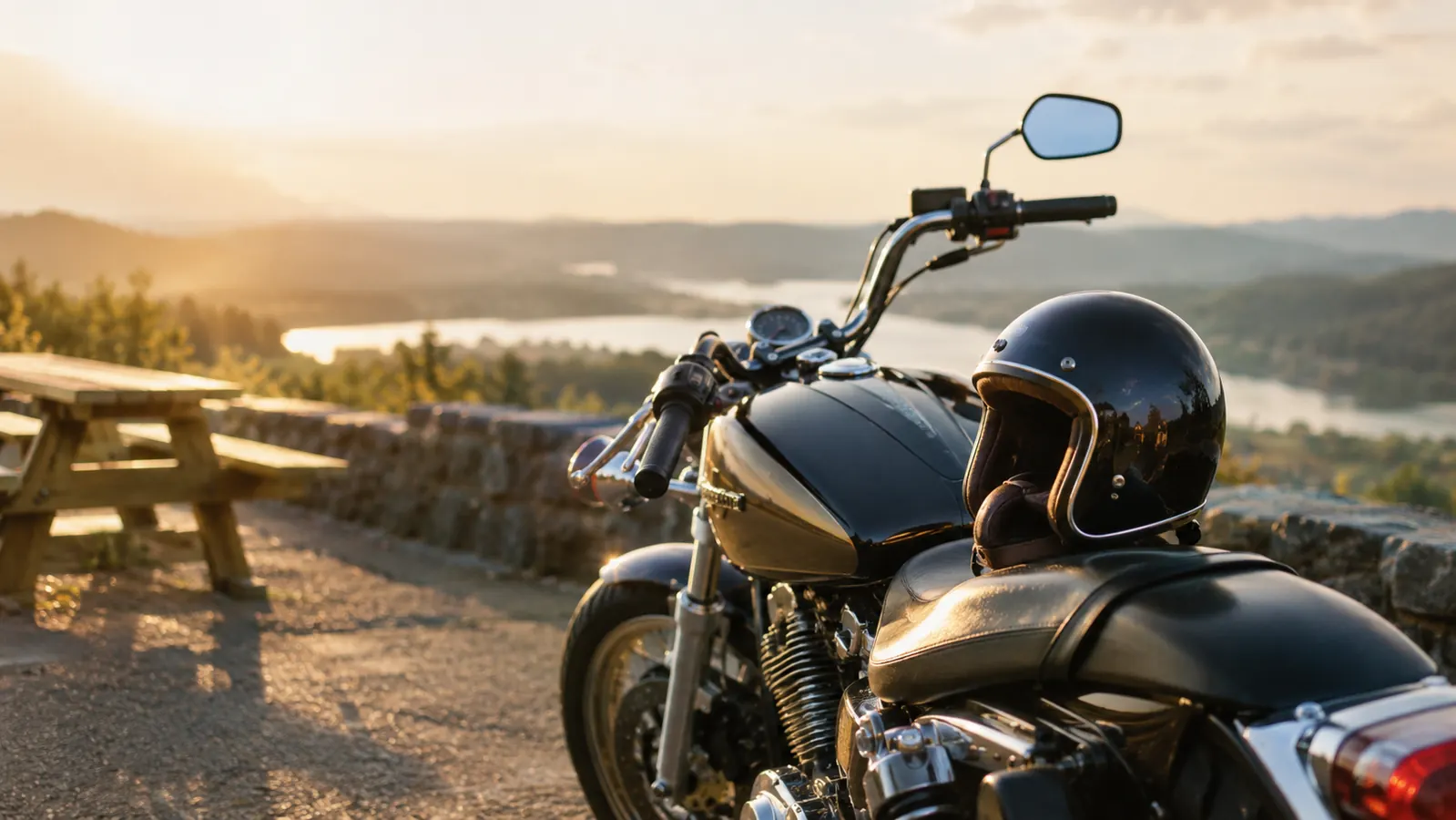
When I pulled my old full-face helmet off at a gas station on a 95-degree day last July, the inside was soaked enough to wring out. I stood there with the liner dripping onto the concrete and thought, this is not why I ride a Harley. That week I ordered a VCOROS half helmet, and I have spent the summer learning exactly where it helps and exactly where it does not. If you are trying to decide between an open-face half helmet and a full-face, let me save you some of the same trial and error.
Here is the short answer before I get into the details: the VCOROS half helmet is the better helmet for warm, fair-weather cruiser and touring rides where air movement matters more than maximum coverage. A full-face helmet is the better helmet for high-speed highway work, cold or wet weather, and anyone who wants the extra chin bar protection. The right choice depends on where your miles actually happen. Mine happen on weekend club rides through the San Joaquin Valley and a couple of longer trips a year on my Heritage Softail. That has made the half helmet the everyday pick in my garage.
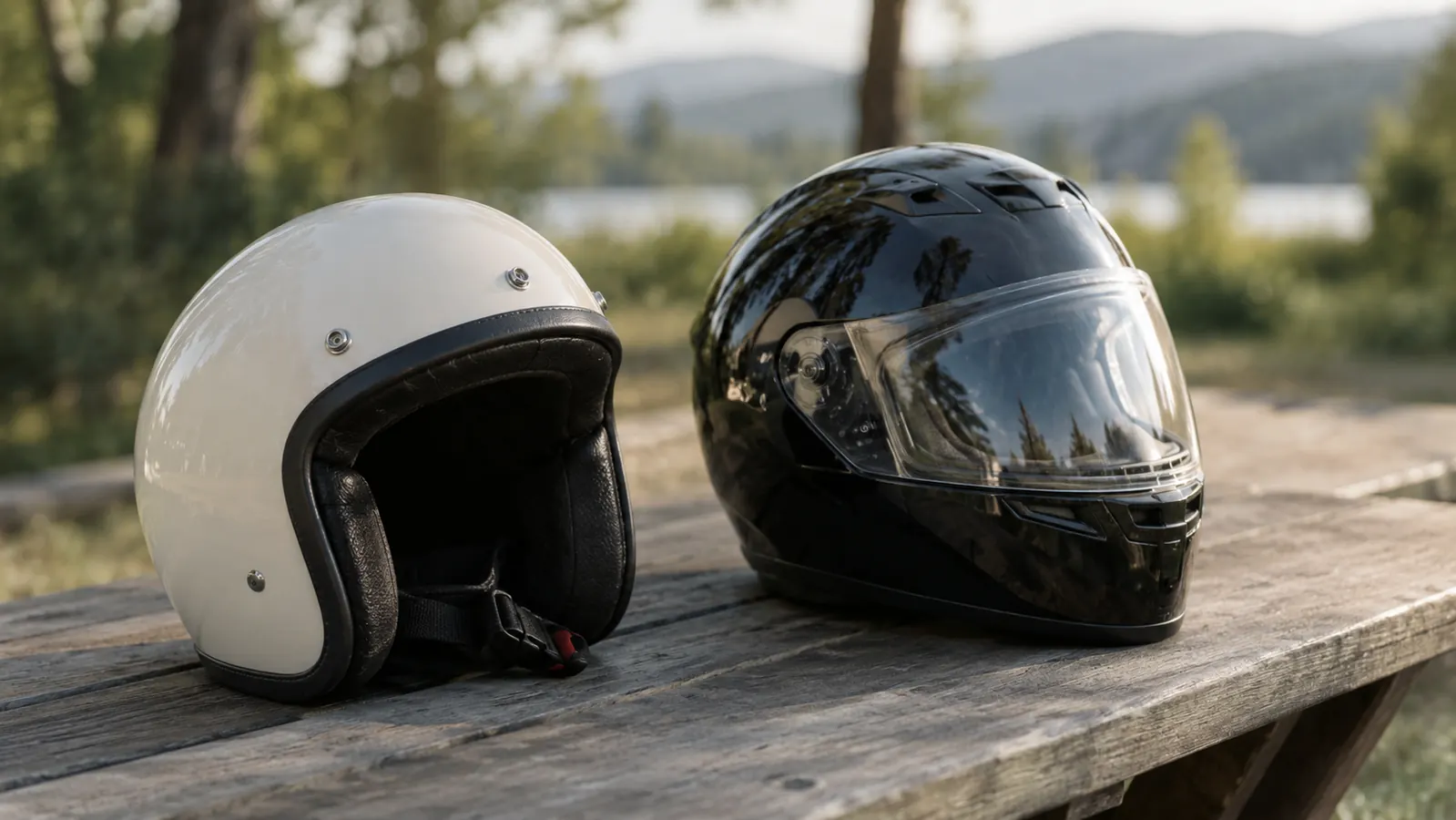
Both helmets meet the same federal DOT standard for the area they cover, but they are not doing the same job. A half helmet protects the crown and sides of your skull. A full-face adds a chin bar and shield that guard your face and jaw. That is a real difference, and it is the reason I am not telling you to throw away your full face. I am telling you that for many of us, the half helmet is the one we actually want to put on.
| VCOROS Half Helmet | Full-Face Helmet | |
|---|---|---|
| Value for the money | The VCOROS gives you a DOT-approved shell, removable liner, and a simple three-quarter fit for a reasonable investment. | A comparable full-face from a major brand usually runs higher for the same features. |
| Weight on your head | Feels lighter over a full day, and I notice it on my neck after 200 miles. | More shell and shield hardware add weight, especially in the chin area. |
| Airflow in warm weather | Open face lets the breeze hit your face; by 50 mph it feels like a fan on your cheeks. | The shield seals out wind but traps heat; you will crack it open at stoplights. |
| Chin and face coverage | None beyond the shell edge; your jaw and cheeks are exposed. | Chin bar and face shield cover the whole front; that is the main safety advantage. |
| Noise at speed | Wind noise builds past 60 mph; I wear earplugs and still hear it. | A fitted shield and shell cut a good amount of the roar, quieter for long trips. |
| Rain, cold, and bugs | Rain hits your face, cold air bites your cheeks, bugs are a real thing. | Sealed shield keeps the weather off you; huge for wet or cold tours. |
| Getting it on and off | Slips on in seconds, works with my sunglasses and prescription glasses. | Takes more fiddling, and the shield can fog on a damp morning. |
| Best for | Warm-weather cruiser rides, bar-hopping, town trips, sunny afternoons. | Cold, wet, fast highway miles, touring in all seasons, or if you want max coverage. |
Where VCOROS Wins
The biggest win for the VCOROS is heat management. I live in Bakersfield, where summer afternoons sit over 100 degrees. A full-face helmet turns a stoplight into a sauna. With the VCOROS, the air moves across my face and I can actually feel the difference between a 110-degree day and a 95-degree one. On a group ride I see other riders lifting their shields every few miles. I do not have to.
The Saturday ride that settled it was the second weekend in August. We left the coffee shop at 7:30, and by the time we reached the straight stretch past the almond orchards it was already 97 degrees and climbing. Every rider with a full-face had their shield cracked open, and two of them pulled over at the rest stop outside Arvin to take theirs off entirely. I kept the VCOROS on all morning. The breeze across my face at 55 mph was the difference between enjoying the ride and just enduring it, and by the time we stopped for lunch I had stopped thinking about the helmet altogether.
It is also easier on my neck. I have a bit of lower-back stiffness that gets worse on long days, and a big heavy helmet makes me tense up without noticing. The VCOROS is lighter, and because the weight sits closer to my head, I forget it is there. After a four-hour loop through the mountains, my shoulders are looser and I do not have that knot between my shoulder blades that used to start by mile fifty.
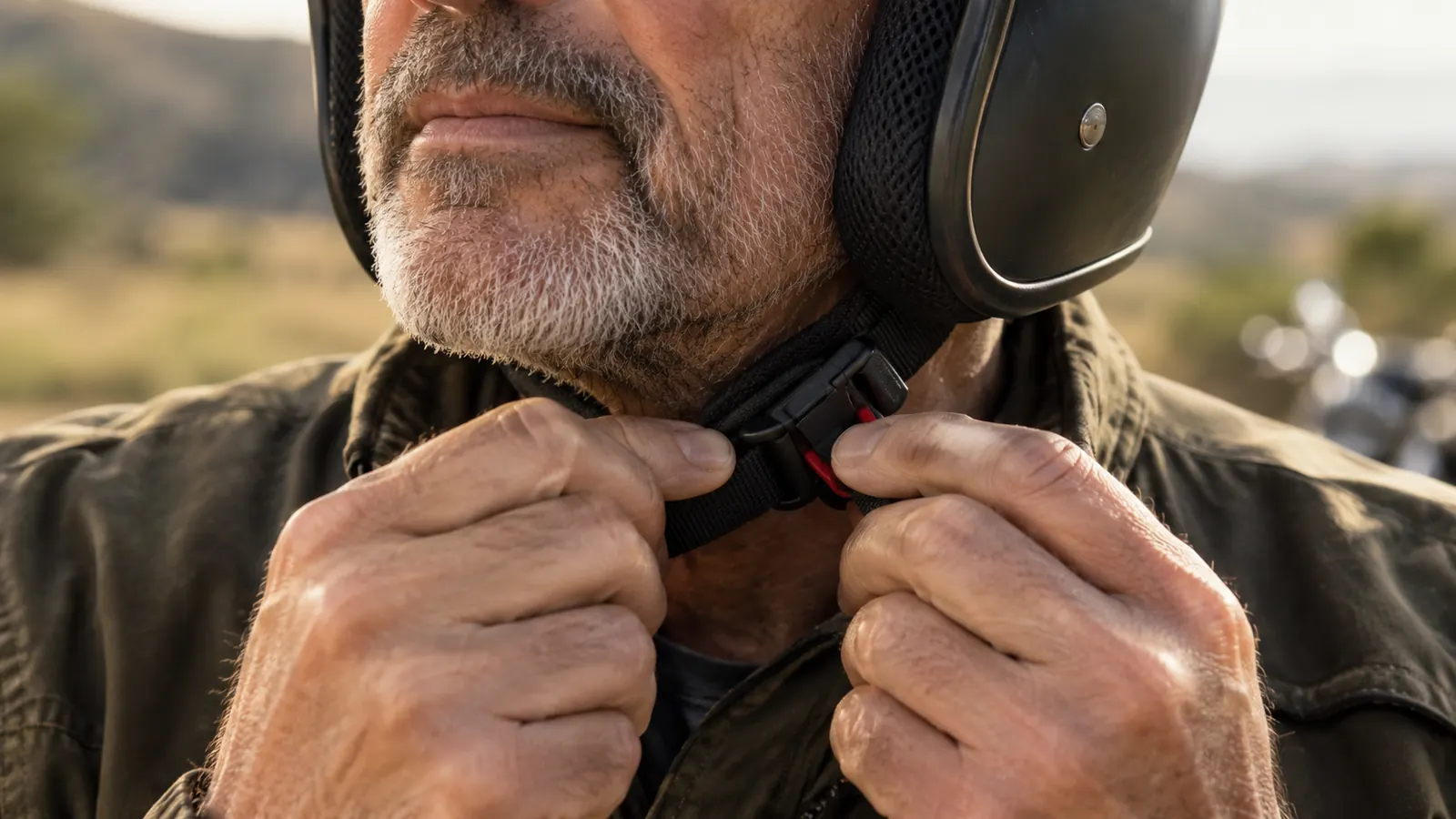
On and off is the quiet win. I ride with sunglasses and sometimes prescription glasses, and the VCOROS goes on without disturbing them. The chin strap is easy to find and buckle, even with gloves on. When we stop for coffee, I can pull it off with one hand and set it on the sissy bar. A full face needs two hands and a fair bit of patience.
That everyday convenience is easy to underestimate until you live with it. I used to think half helmets were all compromise and no upside. After a summer, I have changed my mind. The VCOROS gets the air right, the weight right, and the simple act of putting on a helmet right. In warm weather, that matters more than I expected.
The other thing I did not expect is that the open face makes me more aware of traffic. I hear a car before I see it, and I smell the heat from an engine pulling out of a driveway. Some riders call that a distraction. I call it an extra pair of senses on a road where drivers are not always looking for motorcycles.
Where a Full-Face Helmet Wins
The full-face helmet wins where physics matters most: impact coverage. If you go down on your face, the chin bar on a full-face is the difference between a bruised jaw and a much more serious injury. I have been riding for 22 years and have never tested that, and I hope you never do either, but the geometry is simple. The VCOROS leaves your jaw and cheeks open. No amount of convenience changes that.
The full-face also wins in weather and noise. On a rainy ride down a stretch of coast, or a cold morning when the fog has not lifted, the shield keeps the weather off your face and the shell knocks down wind noise. I ride with earplugs even in the VCOROS, but the full-face is quieter at interstate speeds. If you log serious highway miles, that quiet and the extra protection are worth their weight.
I put that to the test on a 410-mile loop down to the coast and back in October. We left at six in the morning with fog sitting on the valley floor, hit drizzle on the grade, and the shield handled every bit of it. My glasses stayed dry, my face stayed warm, and I did not have to stop and wipe my cheeks every half hour the way the half-helmet riders did. On the long freeway stretches above Santa Maria, the full-face cut the roar down to a level I could live with, which I cannot say for the VCOROS at the same speed.
There is also a confidence piece. Some riders feel safer and ride more aggressively inside a full-face. That alone is a good reason to pick one. The best helmet is the one you actually want to wear, because a helmet only protects you if it is on your head.
Ready for open-air riding without giving up DOT protection
If warm-weather cruiser miles are your everyday, the VCOROS half helmet brings the air movement and light weight that make me reach for it first. It may be the same for you.
Amazon Check Today's Price on Amazon →What the DOT Approval Does and Doesn't Mean
A DOT stamp on the VCOROS means the shell and impact liner have been tested to meet the federal standard for the area they cover. It does not mean it protects your face, because a half helmet covers less. I see riders buy a half helmet thinking they are getting the same protection as a full-face with the top cut off. They are not. You are trading a meaningful chunk of coverage for air, weight, and comfort. Make that trade with your eyes open.
That trade is a good one for me because my riding is mostly fair-weather and my speeds rarely stay above 65 for long. It would be a bad trade for someone who rides all year, carries a passenger on the interstate, or has even a small voice in their head telling them they want more protection. There is no universal right answer. There is only the answer for your riding.
A half helmet is a trade. Know what you are giving up before you make it.
Fit and Comfort on a Long Day
Fit is where a half helmet can surprise you. I wear a medium in most brands, and the VCOROS with its removable liner fits snug across my forehead without pinching. It does not shift when I turn my head at highway speed, which is the first thing I check. The liner comes out for washing, and after a summer of sweaty miles that is worth more than you might think.
My first order was a large, because that is what I wore in a different brand years ago. It moved when I shook my head, and I could feel it shift during a quick lane change, so I sent it back and ordered the medium. The difference was immediate. In the medium I can fit one finger between the liner and my brow, which is the fit test a friend at the riding club taught me, and it stays put when I turn to check my blind spot at 70. Ray tried it on as well, and the shell clears his ears without pinching, which is more than he can say for some full-face shapes he has owned.
My husband Ray rides a full-face on cooler days and reaches for the VCOROS in the heat. He has a more oval head than I do, wears a different size, and the VCOROS fits him without the pressure points he gets in some full-face shapes. That tells me the shell shape is friendly to more than one head shape. Try it with the glasses you actually ride with, because that is where a lot of riders hit a snag. The VCOROS cleared my sunglasses and my prescription pair without a fight.
What I'd Tell a Friend
If someone at a breakfast ride asked me which one to buy, I would not give them a one-word answer. I would ask how many of their miles are sunny and under 65, and whether they already own a full face for the bad days. If they answered mostly warm and yes, I would point them toward the VCOROS and tell them to keep their chinstrap snug. If they hesitated, I would tell them the full-face is the safer call and there is no need to justify it.
A rider at the breakfast meet in September asked me the same question, and I walked him through it the way I just did for you. He does most of his miles on the river road, sunny and 55 to 60 mph, and he had a full-face hanging in his garage that he avoided all summer. He ordered the VCOROS that week. I am not telling you that to sell you anything. I am telling you because the answer gets clearer when you look at your own miles instead of at the marketing, and that is true no matter which way the decision goes.
The one thing I will not do is pretend the half helmet is the same protection in a lighter package. It is not. It is a trade, and the trade has been worth it for me because I know exactly what I gave up. That is the conversation I think more riders should have with themselves before they click buy.
Who Should Buy Which
Buy the VCOROS half helmet if your rides tend to be fair-weather, short to medium, and a big part of the point is feeling the air and the road around you. It suits cruiser and touring riders, riders who like to stop at small-town cafés, and anyone whose neck or shoulders start complaining by the end of a long day in the saddle. The VCOROS is not a track helmet and it is not a winter helmet.
Buy a full-face if you ride in all weather, do a lot of fast highway work, or simply sleep better knowing your chin is covered. There is no shame in that choice. I keep both in my garage now. I reach for the VCOROS about eight times out of ten, but I am glad the full-face is there for cold mornings and long freeway hops. And I check my straps before every ride, because a helmet only helps when it is buckled.
Compare the VCOROS with your current lid on Amazon
Read the rider reviews, check the fit notes, and see whether an open-face half helmet belongs in your gear bag. It changed my summer.
Amazon See the VCOROS on Amazon →