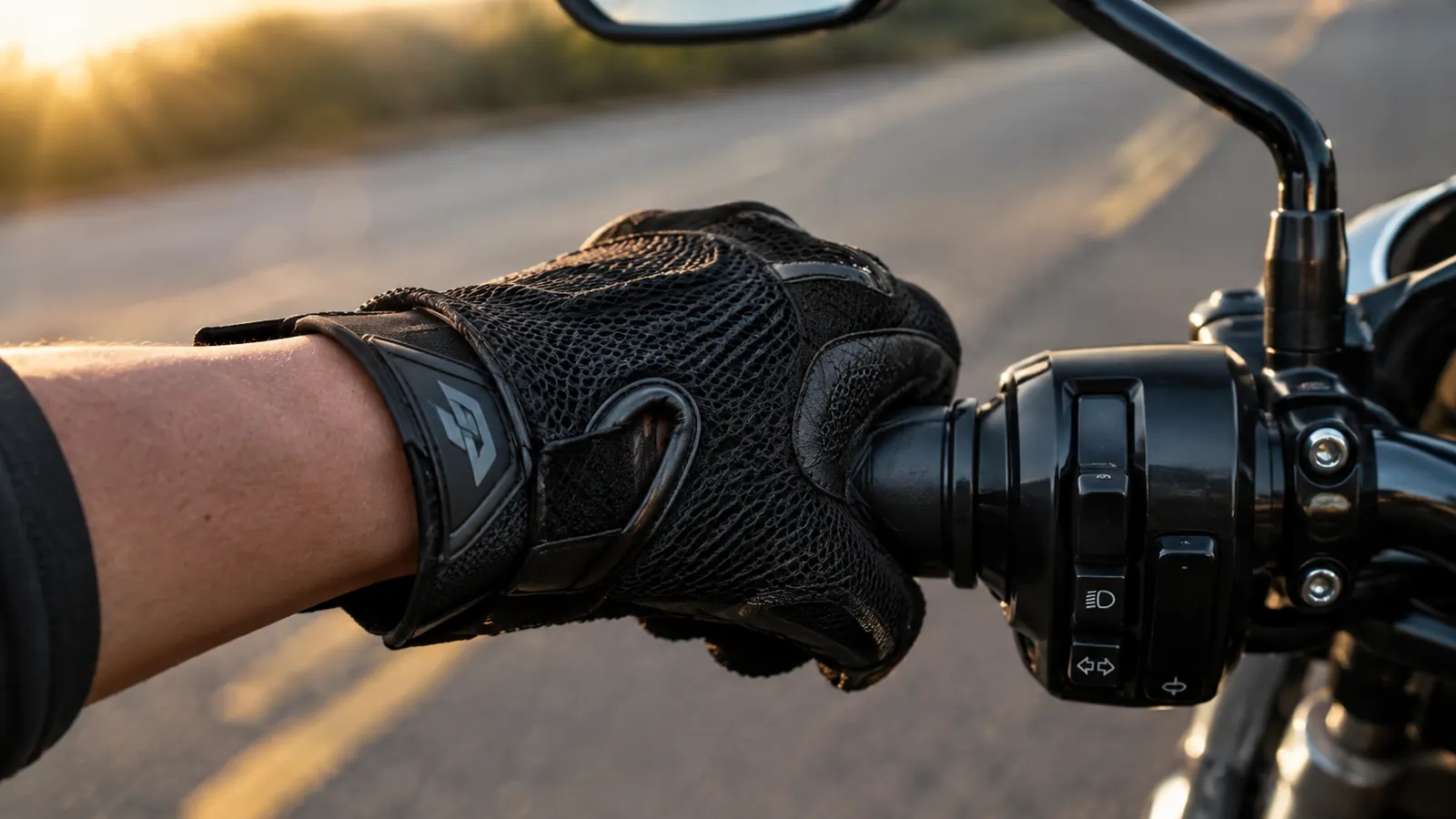
About three hours into a ride, my right hand used to start talking to me. A dull ache across the palm, then a tingle in the ring and pinky fingers, then the urge to shake my hand out at 70 mph. I am Carla, I have ridden for about 22 years, and I spent way too long thinking that was just part of long days in the saddle. It is not. Hand comfort on a long ride comes down to five things you can actually do something about, and the right pair of gloves is the foundation. The INBIKE Motorcycle Gloves Breathable Mesh Touchscreen Hard Knuckles are what I have been wearing on my Harley-Davidson Heritage Softail for the last several months, and they solved more of my hand fatigue than any other single change I have made.
Start with gloves that breathe and flex
The INBIKE mesh gloves are the pair I reach for on every long ride now. Breathable, touchscreen-friendly, and protective without feeling like oven mitts.
Amazon Check Today's Price on Amazon →Step 1: Get the fit right before you ride a single mile
The biggest cause of numb hands on a motorcycle is not vibration. It is a glove that is too tight across the palm, or too loose so you death-grip the bars to keep it from sliding. Either way, you squeeze harder than you need to, and that squeeze is what cuts off circulation. The INBIKE gloves come in a range of sizes, and the sizing chart is worth the two minutes it takes to measure your hand. I measured around the widest part of my palm, just below the knuckles, and ordered the size that matched. When they arrived, the fit was snug through the fingers with no bunching at the palm, and the hook-and-loop closure at the wrist let me dial in the last bit of hold.
Here is the test I use for any riding glove: put it on, make a fist, then open your hand all the way. If the material pulls tight across the palm when you open up, it is too small. If the fingertips have more than a few millimeters of extra room, it is too big. The INBIKE gloves passed that test on the first try. The mesh backing gives a little where you need it, and the synthetic suede palm has just enough grip that I do not feel like I have to clamp down on the grips. On a 400-mile day, that relaxed grip is the difference between arriving with tired hands and arriving with hands that still feel like mine.
One thing I learned the hard way: do the fit check at the end of the day, not the start. Hands swell a little after hours of riding, especially in summer heat. I tried a pair a few years ago that felt perfect in the morning and left red marks across my knuckles by the time we stopped for lunch near Buttonwillow. With the INBIKE gloves, I left a little room in the fingers on purpose, and the hook-and-loop wrist strap means I can snug them down in the morning and let them out a touch by afternoon. That small adjustment made the difference between a glove I wore all day and a glove I would have shoved in the saddlebag by mile 200.
Step 2: Loosen your grip and use the throttle lock
The second fix is free, and it is the one that helped me the most. I used to hold the throttle like I was wringing a towel, especially on the highway where the wind pushes back. Then a friend on a group ride pointed out that my knuckles were white. He told me to relax my grip and let the glove do its job. The INBIKE gloves have a lightly padded palm that takes some of the buzz out of the bars, so I can hold on with maybe half the pressure I used to use. That alone cut my hand fatigue by a noticeable amount on the next long ride.
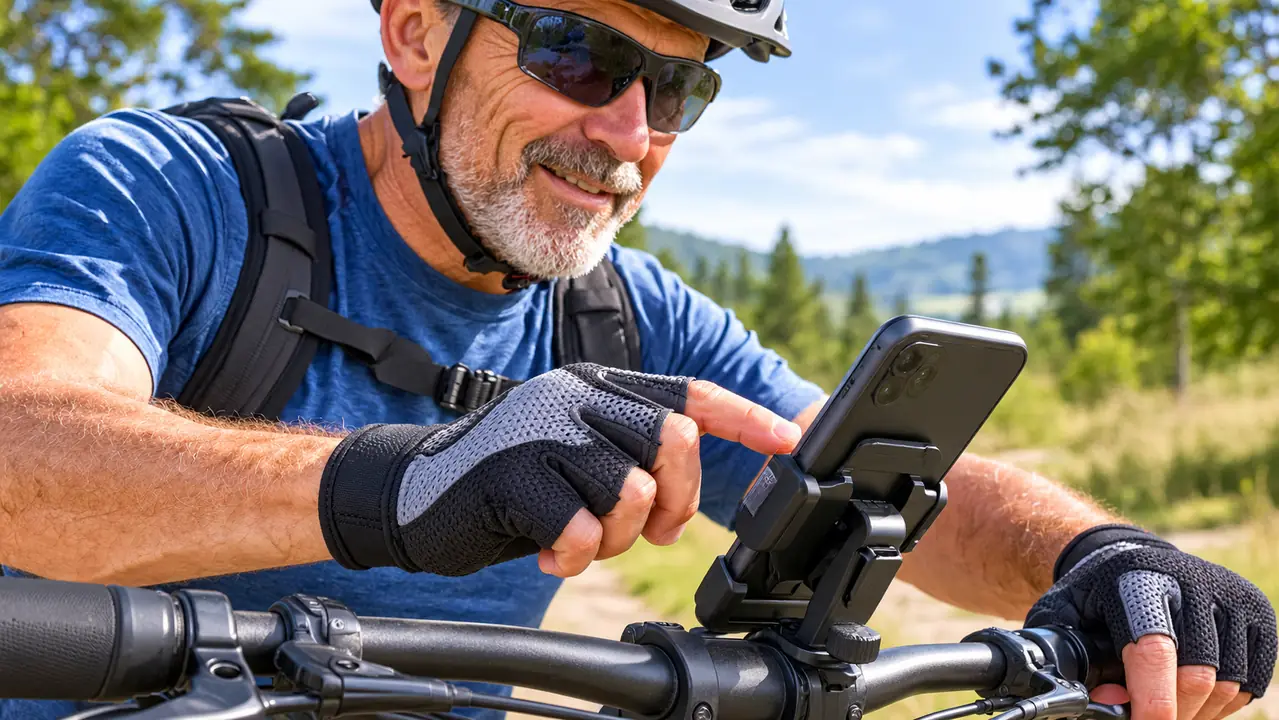
On my Heritage Softail, I also use the throttle lock on long straight stretches of highway. It lets me take my right hand off the grip for a few seconds at a time, shake it out, and stretch my fingers. That little break every twenty minutes or so keeps the tingle from ever starting. The touchscreen fingertips on the INBIKE gloves mean I can even check my phone at a gas stop without taking them off, which sounds like a small thing until you have done it in the rain.
The grip change took practice, and I will be honest that it felt wrong for the first few rides. I was so used to holding on tight that relaxing felt like I was going to lose the bars. What helped was a specific drill: on a straight, empty stretch of road, I would consciously loosen my right hand until I could wiggle my fingers one at a time while still keeping the throttle steady. I did that for about ten minutes a day for a week. By the time we did a 300-mile loop up through the Sierra foothills, I was holding the bars with maybe a third less pressure than I used to, and my hands felt it by the end of the day.
Step 3: Stretch your hands before you need to
I do a quick hand and wrist stretch at every fuel stop, and sometimes on the bike when the road is straight and empty. The basic one is simple: hold your arm out, point your fingers down, and gently pull them back with the other hand for ten seconds. Then point them up and do the same. Then make a fist and open it slowly five times. It takes less than a minute, and it keeps the carpal tunnel from complaining on the second half of the day.
The reason this matters with gloves is that a glove changes how your hand sits on the bar. A good glove like the INBIKE pair keeps your wrist in a neutral line, but you still need to move the joint through its full range on a long day. I have also started doing these stretches at home in the evening after a ride, and my hands feel better the next morning. Ray, my husband, rides his own bike and he makes fun of me for stretching at red lights, but he also borrowed my INBIKE gloves on a trip to the coast and ordered his own pair the next week.
I added one more stretch after a long day on the coast last spring. We had done about 450 miles and my left wrist was complaining by the time we got home. That night I started doing a doorway stretch for the forearms: palm flat against the door frame, fingers pointing back, then lean gently forward until I feel a pull along the underside of the forearm. Thirty seconds on each side, twice. It took about three days for the soreness to settle, and now I do that stretch before a long ride too, not just after. It is not glamorous, but it works, and it costs nothing.
Step 4: Keep your hands warm and dry without overheating
Cold hands are stiff hands, and stiff hands grip too hard. But the Central Valley summer heat is the bigger problem for me. I used to wear heavy leather gloves on hot days because I thought protection meant thickness, and by noon my hands were slick with sweat inside the gloves. That sweat makes you grip harder, and it also makes the glove slide around. The INBIKE mesh gloves changed that for me. The breathable mesh back lets air move through, and the perforated palm keeps the sweat from pooling. On a 95-degree day, my hands stay dry enough that I do not have to think about them.
For cooler mornings, I layer a thin liner glove underneath and the INBIKE gloves still fit fine because the mesh has a little give. I have worn them from about 50 degrees up to over 100, and they handle the range better than any single glove I have owned. The hard knuckle protection is still there on top, so I am not giving up safety for comfort. That combination, breathable but protected, is why these are the gloves I keep on the bike full time now.
The sweat problem was worse than I realized until I paid attention to it. On a ride to the coast in July, I stopped for gas in Kettleman City and took my old leather gloves off to find my hands almost white from moisture and the lining bunched up around my fingers. I had to wrestle them back on, and they never felt right for the rest of the day. With the INBIKE gloves, the mesh lets enough air through that I do not get that soaked feeling even on the hottest afternoons. I still carry a spare pair of light liners in the saddlebag for cool mornings, but I have not needed to change gloves mid-ride since I switched.
Step 5: Use the touchscreen fingertips so you never take the gloves off
This sounds like a convenience feature, but it is actually a comfort feature. Every time you take a glove off to use your phone, you put it back on, and the glove is now slightly damp, slightly twisted, and slightly tighter than it was. Over a long day, that adds up. The INBIKE gloves have touchscreen-compatible fingertips on the thumb and index finger, and they work. I have used them to change music, check a map, and send a quick text at a rest stop without ever pulling the gloves off. My hands stay drier, the fit stays consistent, and I am not wrestling with damp gloves at the side of the road.
The touchscreen material is also on the palm side, so it does not interfere with grip. I was skeptical at first because a lot of touchscreen gloves only work when they are brand new. These have held up through months of regular use, and the sensitivity is still there. For anyone who does a lot of touring, this is one of those small details that makes a big difference by the end of a 500-mile day.
I will give you one honest example of why this matters. On a trip to the coast last fall, I needed to check a text from Ray about where we were meeting for lunch. I was on the shoulder near Pismo Beach, and I did not want to take my gloves off because the wind was cold and my hands were finally warm. With the INBIKE gloves, I just tapped the screen with my index finger, read the message, and got back on the road. It took maybe twenty seconds. That is the kind of small thing that does not sound like much until you have done a few hundred miles with cold hands and you realize you never had to stop and fumble.
What Else Helps
Gloves are the foundation, but they are not the whole answer. Heated grips on my Heritage Softail have been a good addition for early spring and late fall rides, because warm hands grip naturally and do not fatigue as fast. Bar-end weights also cut down the vibration that reaches your palms, and I added a set a few years ago. And the simplest thing of all: schedule your breaks. I plan a five-minute stop every hour and a half, even if I do not need gas. I take the gloves off, let my hands air out, do the stretches, and drink some water. That rhythm, plus the INBIKE gloves, is what got me through a 600-mile day last fall with hands that still worked when I got home.
The INBIKE gloves cut my hand fatigue more than any other single change I have made, and I have been riding for 22 years.
Give your hands a fair shot on the next long ride
The INBIKE mesh gloves are breathable, protective, and touchscreen-friendly. They are the pair I keep on the bike full time now.
Amazon Check Today's Price on Amazon →